
OECD Climate Risk: $111 Trillion Threatens Real Estate in Nigeria
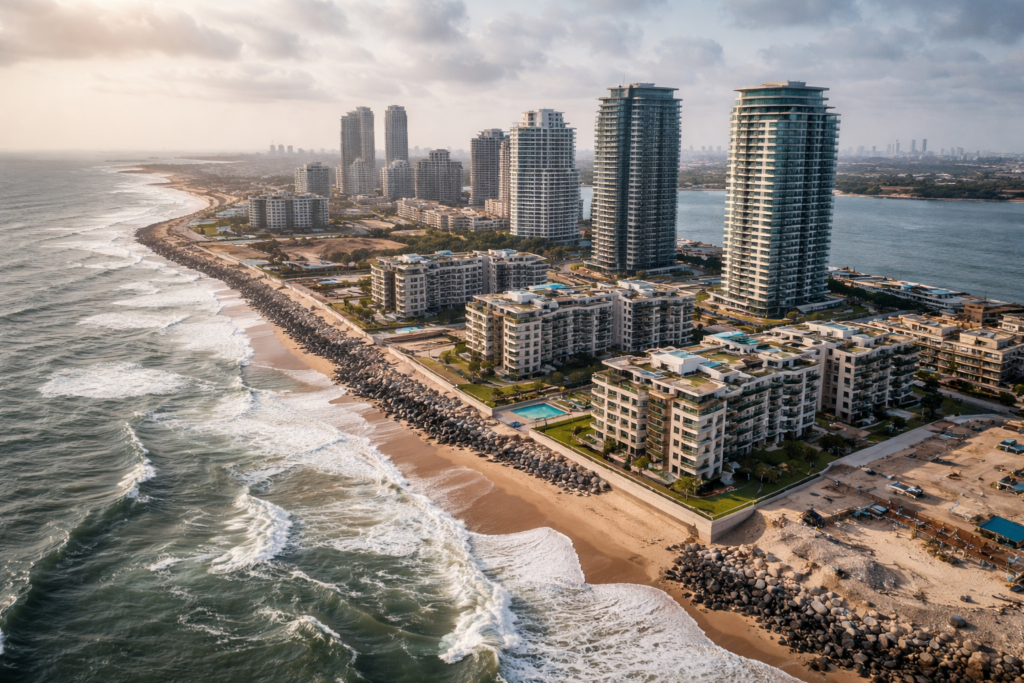
$111 trillion. That’s how much property value across 34 countries now sits in climate danger, according to the Organisation for Economic Co-operation Development (OECD) latest report. And while the world’s richest economies are trying to protect their real estate investments from floods and other climate related hazards, Nigeria is busy sand-filling lagoons to build luxury estates.
Meanwhile, the Organisation for Economic Co-operation and Development just released data that should be of concern to every property developer and investor on the planet. Buildings account for 37% of global carbon emissions. Climate disasters cost the global economy between $50 billion to $430 billion every year. Meanwhile, 58% of institutional investors admit they don’t have proper data to assess climate risks to their properties. If the world’s sophisticated investors are flying blind, what does that say about Nigeria’s real estate market?
What the OECD Report Reveals
Here’s what nobody wants to admit. Only 13% of global investors bother looking at climate risks beyond 2050. That means 87% of property investment decisions ignore what scientists say is coming in the next 25 years. The OECD found that 49% of investors cite unreliable methodologies for climate assessment, while 44% point to misalignment between reporting frameworks for low climate sensitive development in real estate. In simple terms, most of the money flowing into real estate has no idea which properties will be worthless when sea levels rise or floods intensify.
The report identifies two major threats. Physical risks include floods, wildfires, heatwaves, and coastal erosion that directly destroy property value. Transition risks come from new regulations like carbon pricing, stricter building codes, and insurance companies refusing to cover climate-vulnerable areas. Both are already reshaping markets in California, Florida, and across Europe.
Nigeria’s Real Estate Market Ignores Climate Reality
Now compare that to Nigeria. Lagos sits less than two meters above sea level. The city faces regular flooding. Scientists warn that sand-filling projects like Eko Atlantic and the new FBT Coral Estate in Makoko increase flood risk by destroying natural wetlands. Yet developers keep reclaiming lagoons and building on coastal land with zero or inadequate climate risk assessment.
The OECD data shows 216 million people will be displaced by climate change by 2050. Nigeria already has a 28 million housing deficit. Instead of building climate-resilient affordable housing, the government demolishes century-old waterfront communities and partners with developers to build luxury estates on the same flood-prone land.
Growing Real Estate Wealth with Cash Credit
The Cost of Ignoring Climate Science
Insurance penetration in Nigeria sits below 1%, making real estate investment with proper climate assessment a risky venture. That means when floods destroy these new estates, nobody is covered, the property owners lose everything. Banks holding mortgages on climate-vulnerable properties face massive risks. With only 6% of global investors applying full asset lifecycle thinking, most losses are never calculated before they happen.
The OECD warns that stricter building standards and carbon pricing will make older properties obsolete faster. Nigeria has no building energy performance standards, nor carbon pricing regulations, and no mandatory climate disclosures. The market operates on speculation and vibes while climate data screams warnings.
Conclusion
The world’s top economists just quantified the climate threat to real estate. $111 trillion is at stake globally. Floods, fires, and sea-level rise are destroying property values from Los Angeles to Kogi. Yet Nigeria’s real estate sector acts like climate science is optional. We’re building luxury towers on reclaimed wetlands. When the insurance companies pull out and the floods come, developers will have already cashed out. The question is: who’ll be left holding worthless deeds to underwater property? Because the OECD data is clear. And climate related disasters do not negotiate.
Niger Flooding Real Estate Crisis: Lives Lost, Futures Drowned
Pingback: Nigeria's $104B Climate Finance Bank: Green Buildings Win