
Climate Change Property Prices in Nigeria: What Investors Must Know
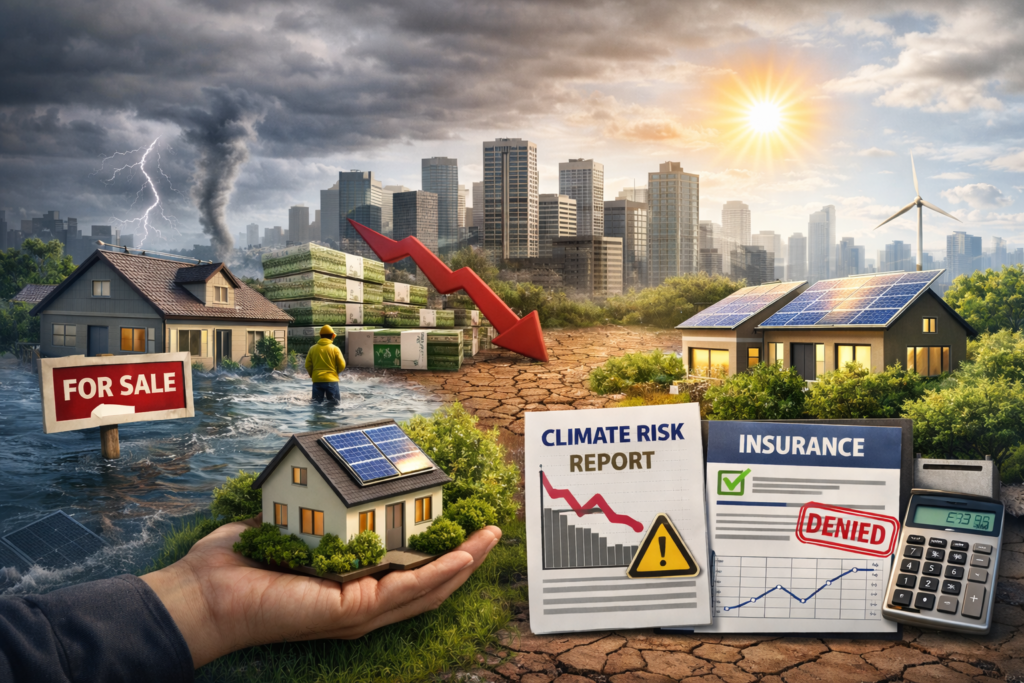
Climate change is rapidly reshaping property markets around the world. Shifting weather patterns, rising temperatures, flooding, and extreme storms are influencing building safety, insurance costs, and where people choose to live. As a result, some properties are gaining value, while others are becoming financial liabilities.
Globally, climate related disasters now cost an estimated $430 billion annually, yet many property markets still fail to fully price climate risk. In the United States, research shows that some high-risk homes remain overpriced because buyers underestimate climate threats.
This global reality is becoming increasingly relevant for Nigeria’s fast-growing real estate sector.
How to Reduce Property Tax in Nigeria: Legal Strategies for Real Estate Investors
Climate Change Is Now a Financial and Investment Issue
Climate risk is no longer just an environmental concern it is a financial one.
Governments worldwide are beginning to incorporate climate risk into building approvals and planning regulations. In New Zealand, courts have ruled that climate impact must be considered before approving major developments.
At the same time, extreme weather events are making certain properties harder or more expensive to insure. When insurance costs rise or coverage disappears entirely property values often decline.
Even digital property platforms such as Zillow are under scrutiny for how they display climate risk data to buyers, highlighting growing global awareness.
Climate change is no longer environmental news. It is now a core business, finance, and investment issue.
Nigeria’s Real Estate Is Expanding, But Climate Planning Lags
Nigeria’s property market is expanding rapidly. New estates, commercial complexes, and residential developments continue to reshape major cities.
However, climate planning remains limited.
Many developers do not incorporate flood resilience, heat mitigation, drainage capacity, or energy efficiency into project design. In addition, few Nigerian real estate firms publish climate policies, emissions data, or sustainability reports.
This lack of transparency may pose future financial risks as global investors increasingly prioritize climate accountability.
Encouragingly, global research shows buyers are willing to pay premiums for energy-efficient, climate-resilient, and environmentally responsible buildings suggesting strong future demand.
The Future Belongs to Climate-Smart Real Estate
Across global markets, climate-safe locations are becoming more desirable and more valuable. Conversely, high-risk areas may lose value over time due to flooding, erosion, heat stress, and infrastructure vulnerability.
This shift is already influencing urban development patterns worldwide.
To remain competitive, developers must begin building with climate realities in mind. Governments must also modernize building codes, drainage planning, and zoning regulations to reflect evolving environmental risks.
Climate-smart design is no longer optional, it is becoming the new industry standard.
Conclusion
The evidence is clear: climate change will shape the future of property values worldwide.
Markets that prepare early will attract investment, reduce risk, and build long-term resilience. Markets that delay may face declining asset values and rising financial exposure. For Nigeria, this moment represents both a warning and an opportunity. If developers, policymakers, and investors act now, the country can build stronger, more resilient, and more valuable cities.
In the years ahead, smart real estate decisions will depend on understanding and integrating climate risk into property development and investment strategies.