How Climate Change Is Changing Real Estate Development in Igbo Land
How Climate Change Is Changing Real Estate Development in Igbo Land
Real estate in Igbo land is no longer shaped by population growth alone. Climate change is now part of the conversation. Rising temperatures, heavier rainfall, frequent flooding, and growing pressure on land are already affecting how properties are built, priced, and maintained across South-Eastern Nigeria. These are no longer distant environmental issues. They are practical realities that developers, landlords, and investors face on the ground.
In cities such as Onitsha, Aba, Enugu, Owerri, Awka, and Nnewi, these pressures are forcing a rethink of space. As land becomes more expensive and climate risks increase, building upward is becoming a practical response rather than a design preference. Quietly, multi-story buildings have been changing the real estate story in Igbo land, and now, it is more sacrosanct.
When Climate Pressure Meets Limited Land
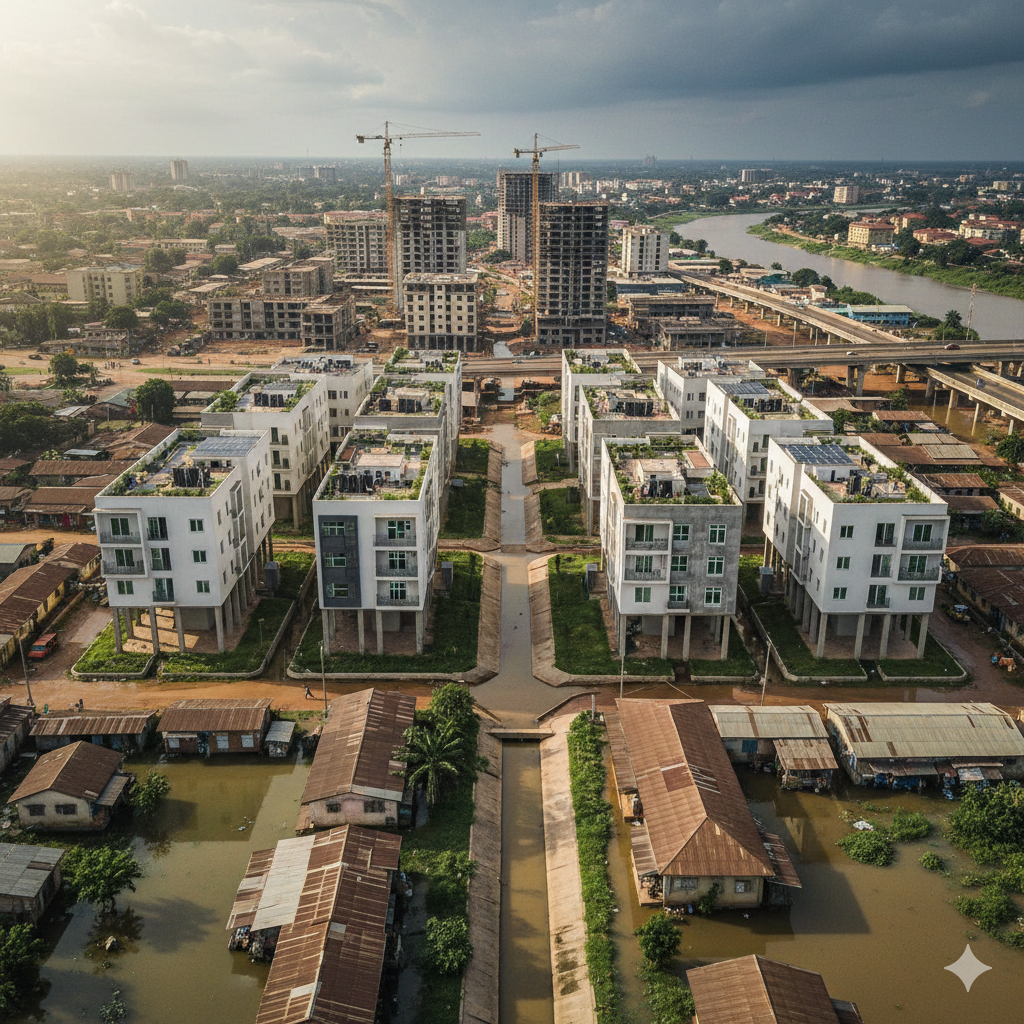
Climate change is intensifying existing urban problems. Heavier rainfall has increased flooding in many low-lying areas, damaging buildings and access roads. Higher temperatures now place extra strain on properties that were never designed to manage heat efficiently.
At the same time, suitable land within city centres continues to shrink and rise in price. Expanding outward often means building on flood-prone land or areas with weak infrastructure.
Because of this, real estate development in Igbo land is adapting. Developers are focusing on safer, better-located plots and building vertically to make better use of them. This reduces climate exposure while improving land value.
Developers are focusing on safer, better-located plots and building vertically to make better use of them. This reduces climate exposure while improving land value.
What Multi-Story Buildings Represent Today
Multi-story buildings are simply properties with more than one floor, used for residential, commercial, or mixed purposes. In many Igbo cities, it is common to find shops at street level, offices on the next floors, and apartments above.
From a climate point of view, this form of development makes sense. Concentrating buildings on smaller land areas allows for better drainage planning, controlled water flow, and more efficient use of infrastructure.
For property owners and investors, this means assets that are better protected against environmental damage and more likely to retain value over time.
How Climate Risk Is Already Affecting Property Value
Many buildings across Igbo land were constructed without considering today’s climate realities.
Poor drainage often leads to repeated flooding, weakening foundations and increasing repair costs. Low-rise buildings spread across flood-prone areas suffer frequent losses from water damage.
Heat is another growing issue. Buildings with poor ventilation and design require constant cooling, increasing energy expenses and reducing comfort for occupants.
Over time, these problems reduce tenant demand, raise maintenance costs, and slowly erode property value. In practical terms, climate risk is already costing real estate owners money.
Why Multi-Story Buildings Offer a Practical Advantage
Multi-story buildings help manage some of these risks.
- Building upward reduces the amount of land exposed to flooding and allows for better elevation and drainage planning. Even when flooding occurs, upper floors often remain usable, helping to protect rental income.
- Vertical buildings also support simple climate-smart features such as cross-ventilation, shading, and shared energy systems. These reduce heat buildup and lower operating costs.
- For investors, this translates into properties that are easier to manage, more attractive to tenants, and more resilient over time.
Urban Resilience and Vertical Growth
As climate risks increase, resilience is becoming a key part of urban real estate planning. While compact vertical development makes it easier for cities to manage drainage systems, road networks, and utilities. It also reduces pressure on environmentally sensitive areas.
For growing Igbo cities, this shift is less about preference and more about necessity. The ability of a property to withstand climate stress will increasingly influence its market value.
The Risk of Ignoring Climate in Vertical Development
Building upward, on its own, is not a solution to climate risk. Height does not automatically equal safety or resilience.
When multi-story buildings are constructed without proper planning, professional supervision, and adherence to building regulations, they can become more vulnerable than traditional low-rise structures. Poor drainage design can trap water around foundations. Substandard materials may weaken faster under heavy rainfall and heat stress. Weak structural planning increases long-term safety concerns.
In such cases, vertical development shifts from being an advantage to becoming a liability increasing maintenance costs, safety risks, and potential loss of value.
The key lesson is clear, climate smart design, quality construction, and regulatory compliance are just as important as building height. Without them, building higher only amplifies existing risks rather than reducing them.
What the Future Looks Like for Real Estate in Igbo Land
Climate change will continue to influence how real estate value is created in Igbo land.
Developers who properly assess climate risks, plan vertically, and build with long-term resilience in mind will be better positioned to protect their assets. Investors who understand this shift will be better prepared for future market changes driven by environmental pressure.
When properly planned, multi-story buildings sit at the meeting point of climate resilience and real estate profitability.
Conclusion
Makoko Demolition, the Part Nobody is Talking About
Enugu Real Estate Takes Off with Aviation Boom
Climate change is no longer separate from real estate decisions in Igbo land. It now shapes land use, building design, and long-term property value.
Multi-story buildings offer a practical response to both land scarcity and climate risk. When developed with care and proper planning, they protect investments, support urban resilience, and shape the future of real estate in South-Eastern Nigeria.
This shift is already happening. The real question is who is prepared for it.
Pingback: Growing Real Estate Wealth with Cash Credit - Green Realty Africa
Pingback: How Climate Change Is Affecting Property Values in Nigeria - Green Realty Africa