
Nigeria Policy Shift Is Quietly Reshaping Real Estate Costs and Opportunities
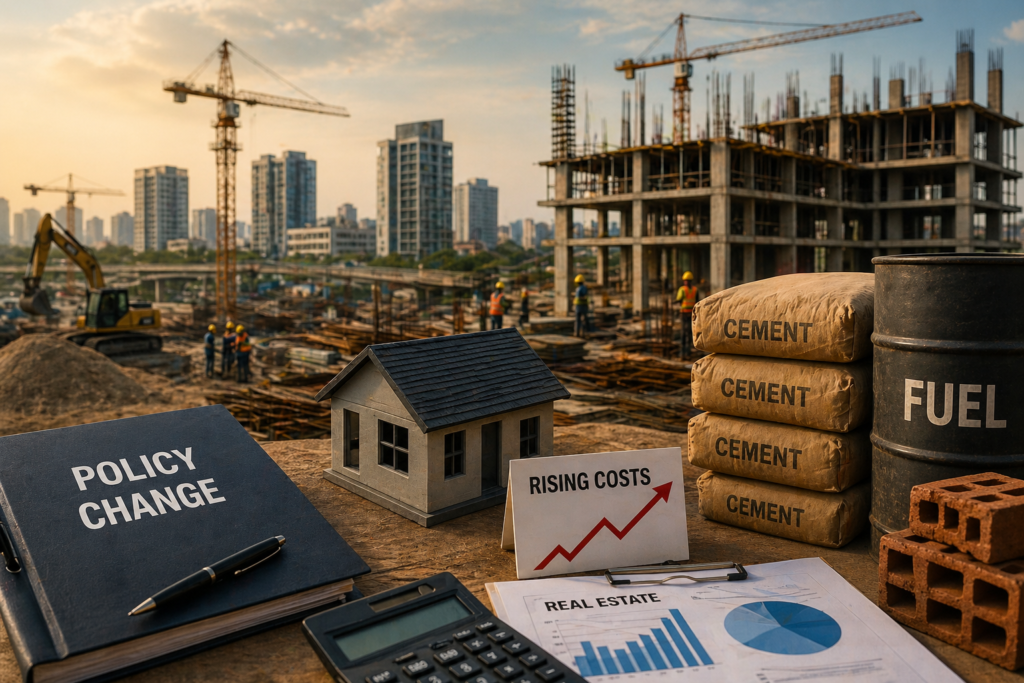
A quiet shift is taking place in Nigeria’s economy, and the real estate sector is beginning to feel its impact.
The conversation is no longer just about land availability or housing demand. Increasingly, policy changes, rising energy costs, and environmental considerations are influencing how projects are developed, financed, and delivered.
While these changes may not appear dramatic on the surface, they are steadily reshaping both the cost of construction and the opportunities within the market.
Policy Changes Are Redefining Cost Structures
Recent policy adjustments are beginning to influence the real estate value chain in complex ways. On one hand, efforts to reduce import duties are expected to improve access to certain construction materials. On the other hand, broader economic realities—particularly rising fuel costs—are pushing operational expenses upward.
At a glance, these developments may seem balanced. However, the underlying cost structure tells a different story.
Nigeria’s construction ecosystem relies heavily on transportation, imported inputs, and energy-intensive processes. As fuel prices increase, the cost of moving materials, powering equipment, and maintaining construction sites rises significantly.
As a result, any gains from reduced material costs are often offset by higher operational expenses.
The Growing Cost Imbalance in Development
This creates a new reality for developers, one defined by imbalance.
While some cost components are stabilizing or declining, others are increasing at a faster rate. This uneven pressure is beginning to influence how projects are planned and executed.
In response, some developers are slowing down projects or delaying new developments altogether. Others are shifting toward higher-end segments where returns are more predictable and margins can absorb rising costs.
This adjustment is not always visible, but it is already shaping the direction of the market.
Buyers Are Becoming More Strategic
The shift is not limited to developers. Buyers are also responding to these changes.
There is a growing awareness around the long-term cost of owning property. Beyond the purchase price, buyers are paying closer attention to factors such as energy efficiency, maintenance requirements, and durability.
This marks a subtle but important transition. Property decisions are no longer driven solely by location or affordability—they are increasingly influenced by long-term sustainability and cost efficiency.
A Market Influenced by Policy and Energy Realities
Nigeria’s real estate sector is entering a phase where it is being shaped by multiple forces simultaneously. Policy decisions, energy costs, and environmental considerations are now directly influencing what gets built, where it is built, and who can access it.
This represents a shift from a demand-driven market to a more complex system where external pressures play a defining role.
Nigeria Real Estate Market Pressures Creating Winners And Struggles
Opportunity Within the Shift
While these changes are creating challenges, they are also opening new opportunities.
Developers who understand the evolving landscape can adapt by building more efficiently and planning for long-term resilience. This may involve using cost-effective materials, integrating energy-saving designs, and reducing dependence on unstable infrastructure. In this context, the ability to anticipate change becomes a competitive advantage.
Conclusion
The policy shift affecting Nigeria’s real estate sector may not be immediately visible, but its impact is already unfolding.
Rising costs, changing buyer behavior, and evolving development strategies all point to a market in transition. For developers and investors, understanding these dynamics early will be critical.
As with many shifts in real estate, the advantage will belong to those who recognize the change before it becomes obvious.