
ESG-Driven Real Estate Transformation Is Redefining Nigeria’s Property Market
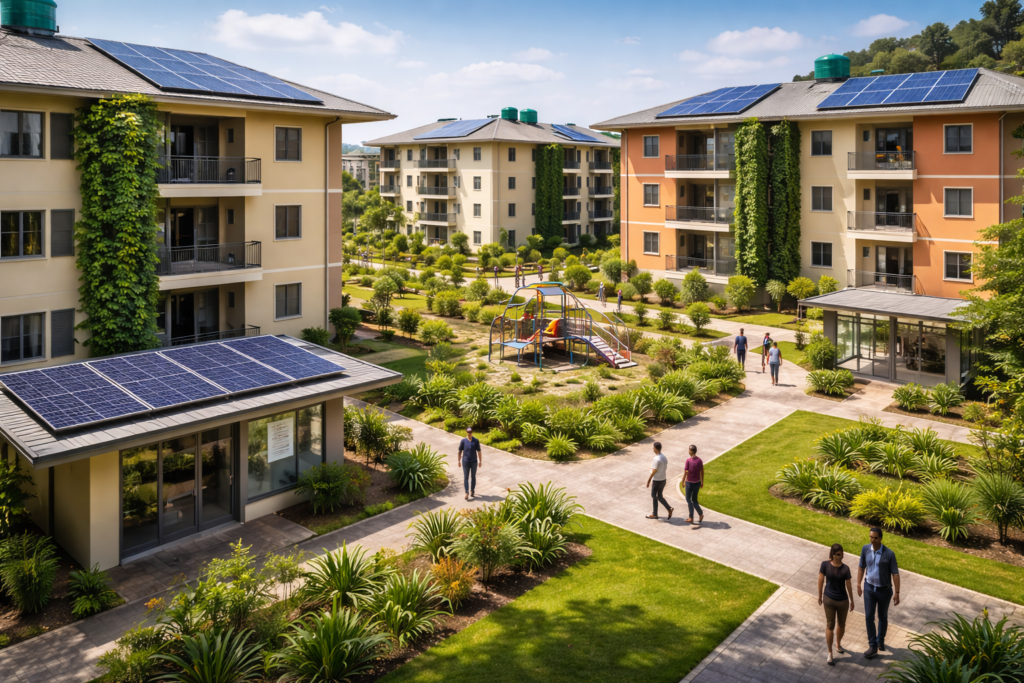
ESG-driven real estate transformation is reshaping how properties are designed, built, and managed in Nigeria. What was once seen as an optional framework is now becoming central to how serious developers and investors operate.
Environmental, social, and governance (ESG) principles are no longer abstract concepts. They are practical tools guiding smarter development, ensuring that buildings are sustainable, communities are protected, and projects are managed with transparency. As Nigeria’s property market evolves, ESG is emerging as a key factor in long-term value creation.
Why ESG Matters in Nigeria’s Real Estate Sector
Nigeria’s real estate sector is expanding rapidly, yet it continues to face persistent challenges, including poor planning, environmental degradation, and inconsistent building standards.
Developments that ignore ESG principles often create long-term risks. Environmentally inefficient buildings increase operating costs. Poorly planned housing can expose residents to flooding and heat stress. Weak governance structures reduce investor confidence and create uncertainty.
By contrast, ESG-focused developments address these issues directly. Energy-efficient designs reduce environmental impact, while socially responsible planning improves safety and inclusivity. Strong governance ensures accountability, transparency, and trust qualities that are increasingly critical in today’s investment landscape.
Investment Is Shifting Toward ESG-Compliant Projects
One of the clearest signs of ESG’s growing influence is the shift in investor behavior. Capital is increasingly flowing toward projects that demonstrate sustainability, resilience, and responsible management.
In Nigeria, this trend is becoming more visible. Developers who integrate ESG principles into their projects are finding it easier to attract funding and build credibility in the market. Sustainable buildings tend to perform better over time, offering lower operating costs and stronger tenant appeal.
On the other hand, projects that fail to meet these standards are gradually losing relevance. As investor expectations evolve, ESG compliance is becoming less of a competitive advantage and more of a baseline requirement.
Why Green Buildings Are the Next Big Money in African Real Estate
From Awareness to Implementation
While awareness of ESG in Nigeria’s real estate sector is growing, implementation remains uneven. Many stakeholders understand the importance of sustainability and governance, but translating that awareness into action is where the real challenge lies.
Practical steps are required. Developers must adopt energy-efficient building methods, prioritize safe and inclusive designs, and maintain transparent project management systems. Investors, in turn, need to support projects that align with these principles.
This shift is not just about meeting global standards, it is about building a more resilient and trustworthy real estate market that can serve both present and future needs.
Conclusion
ESG-driven real estate transformation is redefining what success looks like in Nigeria’s property market. Projects that prioritize environmental responsibility, social impact, and strong governance are becoming more valuable, more resilient, and more attractive to investors.
For developers and investors, the message is clear: adapting to ESG is no longer optional. It is essential for staying competitive and building long-term value.
As the market continues to evolve, those who embrace ESG principles will not only lead the industry but also help shape a more sustainable and credible real estate future for Nigeria.
Nigeria’s Real Estate Boom: Big Q3 Gains, Tougher Questions Ahead