
Enugu Is Changing Faster Than the Real Estate Sector Realises
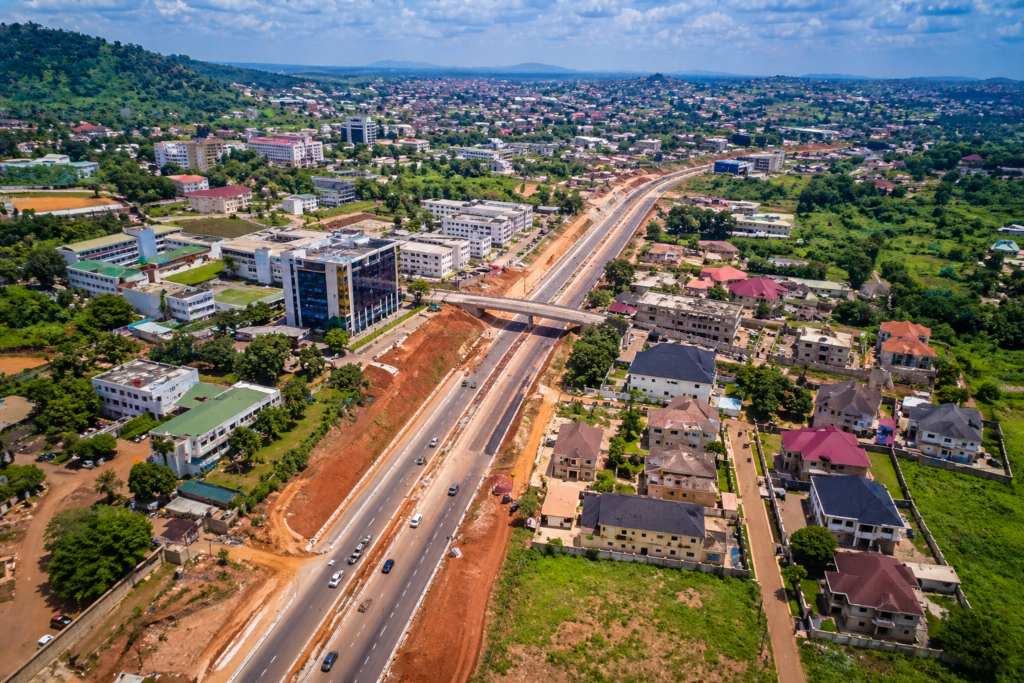
Nigeria’s real estate attention has always followed a predictable pattern. Lagos gets the capital, Abuja gets the government spending, and Port Harcourt gets the oil money, but Enugu real estate growth is breaking that pattern. The market is starting to pay attention.
Enugu Real Estate Growth Is Entering a New Phase
Something deliberate is happening in Enugu. The Mbah administration has moved beyond the kind of governance rhetoric that other states have perfected and started producing visible output. Roads are being rehabilitated, the Akanu Ibiam International Airport is expanding. This will attract more business and investment. Business districts are being activated therefore more professionals and diaspora investors are choosing Enugu. They now see it as a primary destination.
This matters because of how city growth actually works. Cities do not grow gradually. They reach tipping points. Once infrastructure improves, businesses follow. When professionals arrive in large numbers, housing demand increases rapidly. Developers who are already positioned when that tipping point arrives benefit enormously. Those who arrive after it has passed face higher land costs, tighter supply, and a more competitive market. Enugu is approaching that moment now.
Nasarawa, Enugu: What is Next for The Housing Sub-Sector in Nigeria
The Risk Facing Enugu Real Estate Growth
The risk is clear. Enugu could follow the same pattern seen across Nigeria fast, informal, and climate-blind growth that becomes expensive to fix later. Lagos is already living that consequence. Flooding, inadequate drainage, energy vulnerability, and poorly planned density are challenges that the city is now spending enormous resources trying to retrofit. Developers created those problems during the growth phase, when decisions were cheaper and options were wider.
Enugu still has that window. Land in emerging corridors is still accessible. Planning frameworks are still being shaped. The built environment is not yet locked into patterns that will take a generation to undo. That is a genuine advantage but only if it is used deliberately. Developers in Enugu are making decisions today. These choices will shape the city for the next fifty years. Whether those buildings incorporate flood-resilient design, passive cooling, solar energy systems, and efficient materials is not just an environmental question. It is a financial one. Properties built to climate-resilient standards will hold value, attract institutional tenants, and remain insurable as climate risk pricing spreads across African markets.
What Enugu Real Estate Growth Needs Now
Institutional investors are beginning to map Enugu. Developers are starting to look at the city with fresh eyes. The ingredients are already in place. The city has a growing population, improving infrastructure, strong political will, and an active diaspora community. What is needed now is for the real estate industry to show up with the same ambition the city itself is displaying.
Developers must build for the Enugu of today. Not the Enugu of the past. Developers should treat green building as a standard, not an extra. This makes projects easier to finance and more durable. It means engaging with the state government on planning frameworks early, before growth patterns become entrenched. And it means recognising that being early in a city like Enugu, at a moment like this, is one of the most significant competitive advantages available in Nigeria’s real estate market right now.
Conclusion
Every major real estate city in Africa had a moment when it was affordable and accessible. Lagos had that moment. Abuja had it. Those moments passed. Enugu real estate growth is no longer a future trend. It is already happening, and those who move early will have the advantage.