
How Climate Change Is Affecting Property Values in Nigeria
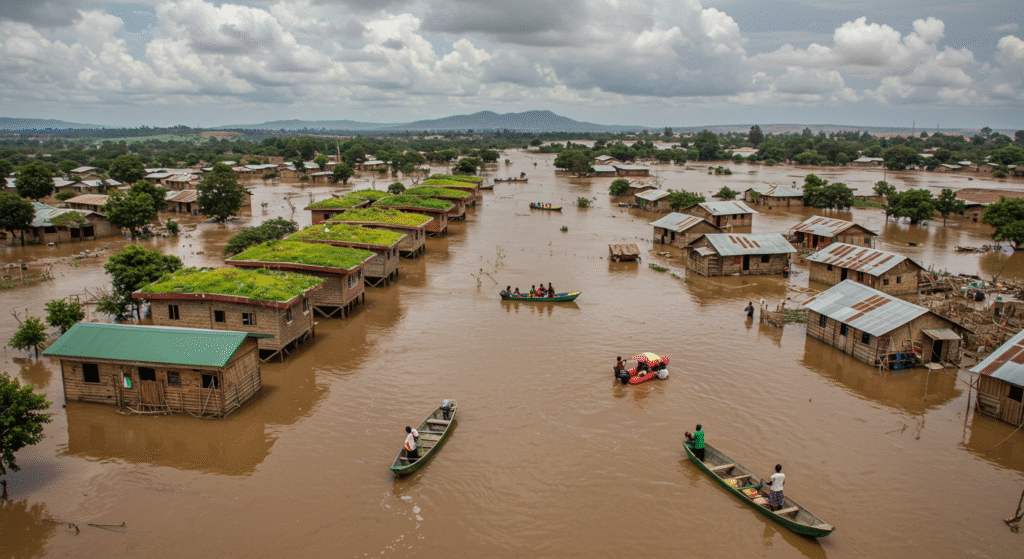
Research reveals surprising distortions in property prices linked to climate risk. In the United States, homes are overvalued by $121 to $237 billion because buyers and sellers aren’t properly pricing flood risk. In England, property values drop by nearly 25% after flooding events. Meanwhile, the University of British Columbia study found that identical homes facing the same flood risk sell for different prices depending on whether the neighborhood believes in climate change or not.
Understanding these patterns matters for Nigerian property buyers navigating a market with even less climate information than developed countries.
Climate change impacts real estate values through two distinct pathways. Understanding these pathways helps buyers make smarter decisions.
How Physical Climate Risk Reduces Property Values
Physical climate risk refers to actual damage from floods, heat waves, storms, and coastal erosion.
When these events occur repeatedly, property values decline for measurable reasons. Insurance becomes expensive or unavailable. Repair costs mount. Future buyers demand discounts to compensate for known risks. Researchers found property prices dropped by about 6% after flooding events. Researchers found property prices dropped 6.26% after flooding. England saw even larger declines of 24.9% following flood events.
The insurance crisis amplifies this effect. When insurance companies withdraw from high-risk areas, as State Farm did in California, properties become difficult to finance. Banks won’t issue mortgages without insurance. This creates a downward spiral where climate-vulnerable properties lose both insurability and marketability. In the United States, 2% of homes worth $882 billion face submersion risk by 2100. Florida and Hawaii could see 10-12% of homes become uninhabitable.
How Climate Change Is Changing Real Estate Development in Igbo Land
Why Denial Inflates Prices
Here’s where it gets interesting, the UBC study compared identical homes in neighborhoods with different climate attitudes. Homes in areas where residents denied climate change sold for 7% more than identical properties in neighborhoods that accepted climate science. Both properties faced exactly the same flood risk. The difference was purely psychological. When buyers don’t believe climate change is real, they don’t discount prices for future risk. This creates temporary price inflation that collapses when physical reality arrives.
This belief-based pricing is even more dangerous in Nigeria. At least American buyers have access to flood maps and climate data, even if they ignore it. Nigerian property buyers often have zero information about elevation, flooding history, or future risk. Marketing materials promote “waterfront luxury” without mentioning that Lagos sits less than two meters above sea level.
What This Means for Nigerian Property Buyers
Nigerian buyers face a double challenge. First, physical risks are high. Lagos experiences annual flooding in Victoria Island, Ikoyi, and Lekki. Coastal erosion is accelerating. Sand-filling projects like Eko Atlantic may worsen flooding in surrounding areas. Second, information is scarce. No official flood zone maps exist. Insurance penetration is below 1%. Energy efficiency standards aren’t enforced.
This information gap creates massive overvaluation risk. Buyers pay premium prices for properties whose climate vulnerability is unknown. When insurance becomes mandatory or flooding worsens, values could drop sharply.
Conclusion
Climate change affects property values whether buyers believe in it or not. Physical damage, insurance availability, and energy costs are reshaping real estate markets globally. Nigerian buyers should ask developers for elevation data, research flooding history, and factor future climate costs into purchase decisions. The UBC study’s lesson is clear: denial doesn’t eliminate risk; it just delays the price correction. Smart buyers price in climate reality today rather than waiting for the market to force the adjustment tomorrow. In a country with minimal climate disclosure requirements, self-education is the only protection against buying overvalued climate-vulnerable property.
Enugu Real Estate Takes Off with Aviation Boom