Regenerative Real Estate in Africa: The Future Beyond Sustainable Buildings
Sustainable real estate changed everything. It shifted how buildings were designed, financed, and valued. But in 2026, the conversation is evolving toward regenerative real estate in Africa a new approach that goes beyond sustainability to actively restore ecosystems and strengthen communities.
The Limit of “Doing Less Harm”
The logic of sustainable building is, at its core, a logic of reduction. Build with fewer emissions, waste fewer resources, and reduce your footprint. In short, shrink your impact.
These are necessary goals. But as climate pressures intensify across African cities from rising temperatures to shifting rainfall patterns and coastal threats the question is no longer just how to do less harm. It is how to build in ways that actively restore, heal, and contribute
This is the essence of the regenerative shift. Buildings and developments that give back more than they take. Communities designed not just to exist within ecosystems, but to strengthen them.
What Regenerative Real Estate in Africa Actually Means
Regenerative development is not an abstract philosophy. It is a design and construction approach with practical, measurable outcomes.
While sustainable buildings aim for net zero by neutralising their environmental impact, regenerative buildings aim to be net positive. They generate more energy than they consume and produce their own water. Furthermore, they clean the air around them, restore biodiversity, and actively support the health of their residents and surrounding communities.
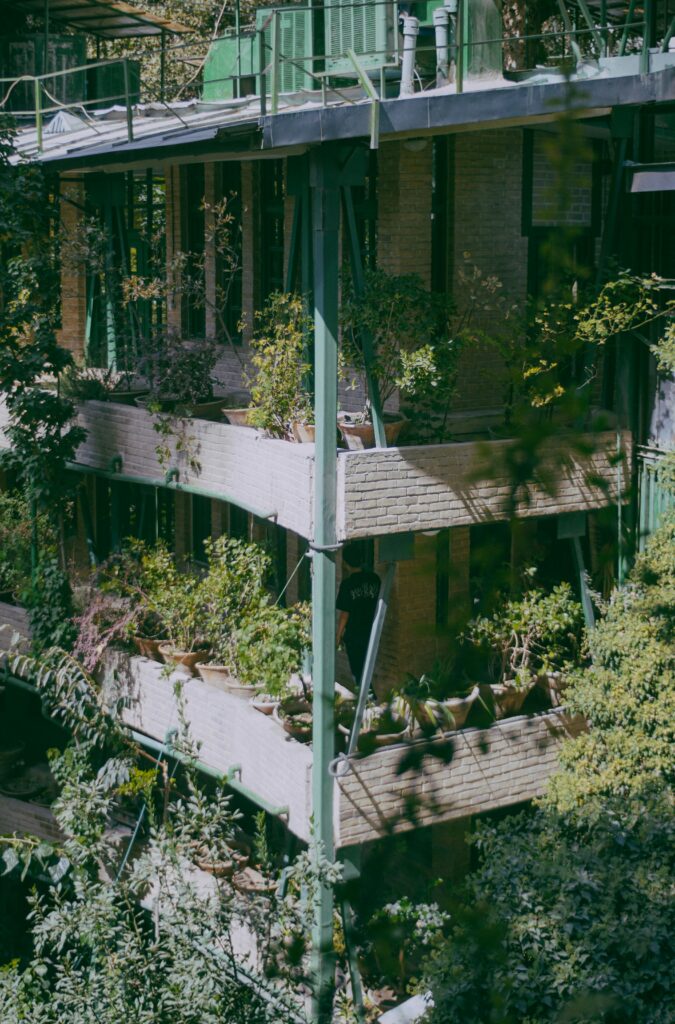
The tools already exist. Regenerative landscaping that replaces invasive species with native biodiversity and reduces urban heat island effects. Passive cooling systems that eliminate energy-intensive air conditioning. Greywater recycling that closes the water loop within a single building. Rooftop solar and vertical gardens that transform a building’s surfaces from inert materials into productive ecosystems.
These are not futuristic concepts. In fact, they are being applied today, including right here on the African continent
Africa’s Own Regenerative Story
One of the most inspiring demonstrations of regenerative design on the continent is also one of the least widely known.
In Tshuapa, in the Democratic Republic of the Congo, the Ilima Primary School was designed to function as a bridge between its surrounding farmland and jungle. Built from custom shingles, mud bricks, and locally sourced timber, the school incorporates woven vines that grow around the building, providing natural cooling that keeps the interior comfortable without any mechanical systems. Its construction produced 307 fewer tonnes of CO₂ than the global average for buildings of its type and size.
This is not just a beautiful building; it is proof of concept that African architecture, drawing on local materials, traditional knowledge, and climate-responsive design, can deliver regenerative outcomes at a fraction of the cost of high-tech solutions imported from elsewhere.
The broader lesson matters deeply for Nigeria and the continent. Africa does not need to borrow regenerative models from other climates. It can develop its own, rooted in its own building traditions, materials, and ecological intelligence.
Why 2026 Is the Inflection Point
Several forces are converging to make regenerative real estate not just morally compelling but commercially essential.
Regulation is catching up. Therefore, developers who build beyond compliance today are positioning themselves ahead of tomorrow’s mandates, turning potential future liabilities into current competitive advantages.
Moreover, capital is following purpose. ESG and impact investment strategies are channelling billions into real estate that can demonstrate measurable regenerative outcomes. Buildings that restore ecosystems, improve community health, and generate their own resources attract institutional capital that conventional green projects cannot access.
Africa’s scale of urbanisation demands it.
By 2050, Africa will be home to 1.1 billion more people than today.
Remarkably, about 80% of the buildings that will exist in 2050 have not yet been built. No other region on earth has this opportunity, to define an entire generation of built environment at scale, from the ground up, without the constraint of existing inefficient stock to retrofit.
Africa is not on the periphery of the global building decarbonisation conversation. It has the potential to lead it much like Kenya’s M-Pesa led the world in mobile finance.
Climate-Proof Real Estate and Nigeria’s Property Future
How Climate Change Is Affecting Property Values in Nigeria
The Questions Regenerative Design Asks
For developers and investors beginning to engage with regenerative principles, the shift starts with asking different questions.
Instead of “how do we reduce this building’s environmental impact?” ask: “how can this building improve the environment around it?”
Instead of “what certification standard do we need to meet?” ask: “what can this building contribute to the community and ecosystem it sits within?”
Instead of “what are the minimum energy efficiency requirements?” ask: “how can this building generate more energy than it uses, and share the surplus?”
These are not rhetorical questions. They are design briefs and they lead to buildings that are more valuable, more resilient, and more aligned with where African cities need to go.
What Green Realty Africa Believes
Our tagline is “Building a Sustainable Planet, Story by Story.” But stories evolve. And the story of real estate in Africa is evolving from sustainability to regeneration.
Africa’s urban future does not have to look like anyone else’s past. The cities of Lagos, Abuja, Nairobi, Accra, and Kigali can be built differently as living systems that support human flourishing, restore natural ecosystems, and generate the resources their communities need.
The developers, investors, and civic leaders who understand this shift and act on it now will not just build better buildings. They will shape the kind of Africa we all want to live in.
Regenerative development is not the future of real estate. It is the present for those with the vision to see it.
Conclusion
Sustainable real estate was never the destination. It was always the first step.
The real destination is a built environment that does not just survive on this planet but actively heals it. That restores what urbanisation has taken. That gives back more than it consumes. That is what regenerative development means and Africa is uniquely positioned to lead that movement.
Nigeria’s developers, investors, and urban planners have a choice to make in 2026. Build to yesterday’s standards and face tomorrow’s obsolescence. Or build beyond sustainability toward regeneration and help shape a continent that the next generation will be proud to inherit.
At Green Realty Africa, we will keep telling that story. Because the planet depends on it.