
FMBN Launches N100 Million Diaspora Mortgage for Nigerians Abroad
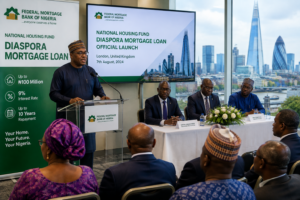
The Federal Mortgage Bank of Nigeria (FMBN) has launched a diaspora mortgage product. It gives Nigerians abroad access to formal housing finance for the first time through this channel. The National Housing Fund (NHF) Diaspora Mortgage Loan officially launched in London on August 7.
How It Works
Eligible Nigerians abroad can register under the NHF scheme, complete KYC digitally, and make contributions remotely, all without travelling to Nigeria. Successful applicants can access up to N100 million. However, the exact amount depends on individual affordability and other requirements. The loan carries a 9% annual interest rate with a maximum 10-year repayment period.
Why FMBN Built This
Minister of Housing and Urban Development, Dr. Muttaqha Rabe Darma, represented by Minister of State Hon. Yusuf Ata, said many Nigerians abroad have long wanted to own homes back home. According to him, some diaspora buyers have faced fraudulent transactions, abandoned projects, unreliable intermediaries, and inadequate financing arrangements. As a result, the new product aims to restore confidence through credible institutions, transparent processes, and secure financing.
FMBN Managing Director Shehu Usman Osidi described the initiative as more than a homeownership product. Instead, he called it a national housing finance strategy that could stimulate residential construction, support developers, create jobs, deepen mortgage penetration, and increase foreign exchange inflows into Nigeria.
Empty Houses, Rising Rents: The Paradox of Lagos Real Estate
Why This Matters for Real Estate
Diaspora capital has long been a missing piece in Nigeria’s housing finance puzzle, alongside high local mortgage rates and a shallow deficit-financing pipeline. If this scheme gains traction, it could open a new, more secure channel of demand for Nigeria’s real estate market. That’s a shift from the informal cash transactions that have long defined how diaspora Nigerians buy property.
Conclusion
FMBN has built the framework to fix a long-standing trust problem. Whether Nigerians abroad actually take up the offer will depend on execution, not just good intentions on a launch stage in London.
PRAISE SAMSON