
WEP trains 100 Nasarawa women farmers to farm smarter in a changing climate
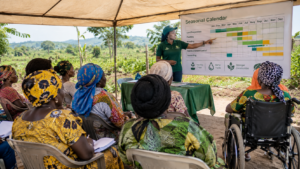
The Women Environmental Programmed (WEP) has trained no fewer than 100 women farmers in Doma Local Government Area of Nasarawa State on climate education and sustainable farming practices. Programmed Lead Damaris Uja said the training falls under a project titled “Strengthening Climate Resilience and Sustainable Livelihood for Rural Women,” funded by Irish Aid with support from the Government of Ireland. The story was reported by Collins Agwam of Punch. You may wonder why a real estate man cares. I do, because land is only as valuable as what people can safely do with it.
Weather Data Is a Business Asset
Uja said one of the biggest problems these women face is the lack of access to weather information, especially the climate seasonal calendar released by NiMet. She described the pattern clearly: “Once they see the first rain, they run to their farms and plant.” Then the rain stops, and the seed is wasted. NiMet officials were brought in to show the women how to access weather information, and retired State Director of Climate Change, Angbashi Ishaku, urged strict adherence to the seasonal calendar.
Every serious investor reads the data before committing capital. Farmers deserve the same advantage. Planting on a false start is simply a bad investment.
Climate Smart Poultry Technology Wins Big: The Key Facts
Inclusion Widens the Impact
WEP selected the 100 women through community engagements in five communities in Doma, working with community leaders. The group includes women with disabilities, whom Uja said are often left behind even though they farm. The project is also designed to reach over 1,000 households indirectly.
Participants Alheri Joseph and Asheazi Nasara said they learned about climate-smart agriculture, including the right timing for planting and harvesting, and storage management to reduce post-harvest losses. Those are practical lessons that can protect a household’s income.
What This Means for Land and Property
Here is my own view. Farmers who lose less and earn more become stronger customers, tenants and homeowners. Stable rural incomes support local markets, and local markets create demand for storage, processing and decent housing. That is how property values grow in a healthy community, from the ground up.
Of course, one training does not transform a region. Women farmers will still need secure access to land, finance and continued support. But the direction is right. Climate-smart agriculture works best when knowledge reaches the people actually holding the hoe, and that is what this project aims to do.
If you invest in African land, look beyond the title and the price per plot. Ask who farms it, what weather information they can reach, and how well they are prepared for the next season. Those answers tell you more than any brochure.