
$500m to fight floods. The real return comes when the land is restored.
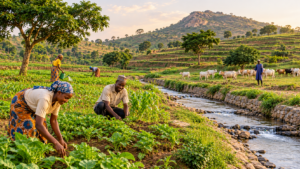
Floods don’t check title deeds. When water takes farmland, roads and homes, it takes value with it. So when the World Bank approved $500 million to tackle flooding and land degradation in northern Nigeria, the property market had good reason to pay attention.
What the Money Will Actually Do
The funding is additional financing for the Agro-Climatic Resilience in Semi-Arid Landscapes Project (ACReSAL), covering 19 northern states and the FCT. By 2031, the goal is to restore 1.4 million hectares of land and benefit about 6.6 million people. That means rehabilitating watersheds, controlling erosion and improving water management in communities that flood and dry out in turn.
The project has a track record. Since 2022, it has introduced sustainable land management on roughly 550,000 hectares and reached over 4.4 million people. It has also beaten its target for improved catchment management. The World Bank expects higher household incomes, fewer flood deaths, healthier soil and less friction between farmers, herders and communities competing for land and water. The Federal Ministries of Environment, Water Resources and Sanitation, and Agriculture and Food Security are implementing it.
1.5% of climate finance. 100% of our children’s future.
The Debt Question We Shouldn’t Dodge
Here’s the part every investor should read twice. According to a Punch analysis of Debt Management Office figures, Nigeria’s debt to the World Bank rose from $14.34 billion in March 2023 to $20.73 billion by June 2026, an increase of about 44.6 per cent. The World Bank now accounts for roughly 38 per cent of the country’s $54.52 billion external debt, making it our largest multilateral creditor. This approval also comes about four months after a separate $1.25 billion package.
I don’t see borrowing as the problem. Debt that finances a productive asset can pay for itself many times over. The real test is delivery, meaning hectares restored, floods reduced and incomes raised. UN climate adviser Selwin Hart has made the same point, that climate finance should not simply pile on more debt.
What Real Estate Should Take From This
Land restoration and flood control protect more than farms. They protect the roads, storage facilities, rural housing and supply chains that depend on stable land and predictable water.
My advice to developers and investors: run a proper flood and watershed assessment before you buy land, in the north or anywhere else. Follow where climate resilience money is going, because infrastructure tends to follow it. And hold implementers accountable for results, since our returns depend on them.
The money is approved. The value comes when the work gets done.