The smartest buildings in Nigeria won’t be the tallest. They’ll be the cheapest to run.
Climate change isn’t a distant threat anymore. It’s already in our electricity bills, our diesel receipts and our flooded streets. Each of those changes the numbers on a property deal, and smart investors know it.
The European Environment Agency makes a simple point: cutting emissions means changing how we generate energy, construct buildings and manage resources. Europe has done it through renewables, efficiency and cleaner production. Nigeria can learn from that, but we have to build solutions that fit our own economy.
Start with the numbers. The European Commission’s Joint Research Centre estimates Nigeria produced about 350.6 million tonnes of greenhouse gas emissions in 2024. Emissions from our building sector rose 55% between 1990 and 2024. That’s what happens when we build cheap and run expensive. A poorly designed building that leans on air conditioning, diesel generators and inefficient lighting costs its owner money every single month.
Developers, architects and investors have to look past the construction budget and price in the full lifetime cost of running a building.
Green Building Is Smart Money, Not a Luxury
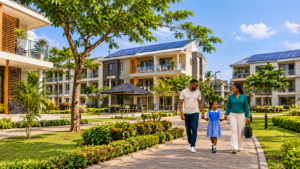
Many Nigerians still hear “green building” and think expensive. I’d push back hard on that. Solar power, natural ventilation, efficient lighting, water-saving fittings, good insulation and locally sourced materials all cut running costs.
A development designed to capture daylight and airflow needs less lighting and cooling. Solar means less diesel, which matters most where grid supply is unreliable. The payoff is tenants who want to stay, lower maintenance and energy bills, and stronger long-term value.
There’s a policy tailwind too. Nigeria’s 2025 climate pledge targets emissions of 168.2 million tonnes of CO₂ equivalent by 2030, measured against a 2018 baseline. Real estate can’t sit that one out.
Climate Risk Valuation Gap Exposing Hidden Losses in Nigeria Real Estate
The Questions Every Investor Should Ask
Sustainability can’t remain an optional extra. Government, banks and developers need to work together on green building standards, climate-friendly financing, better waste management and renewable energy adoption.
Investors, start asking developers three things. How much energy will this property use? Can it handle flooding and extreme heat? Does the design lower operating costs over time? Those answers will separate sound assets from expensive liabilities.
Nigeria’s property future won’t be judged by how much we build, but by how intelligently we build. Green design protects value, lowers costs, creates healthier communities and delivers better returns. The industry can wait for climate risk to set the agenda, or it can lead. The smartest developers will lead.