
Big Climate Numbers Don’t Build Anything. Ownership Does.
In my business, a big number only matters if someone is accountable for it. Nigeria’s updated climate plan puts a $337 billion price tag on climate action between 2026 and 2035. The harder question, and the one raised at COP31 in Antalya, is whether that money turns into projects that deliver.
The Numbers Behind the Ask
The figure comes from Nigeria’s Third Nationally Determined Contribution (NDC 3.0), and it works out to about $33.7 billion a year. Of the total, $195 billion is for mitigation, $141.5 billion for adaptation and $500 million for climate empowerment. The plan also shifts to economy-wide absolute emissions cuts, aligned with the 1.5°C goal and Nigeria’s Net-Zero by 2060 target.
Nigeria expects to raise about $67 billion, roughly 20 per cent, at home. The other $270 billion, or 80 per cent, would have to come from grants, concessional finance, private investment and technology support.
There’s some movement. In June, the National Economic Council approved N83.2 billion for flood and climate emergencies, and the Nigeria Climate Investment Platform is targeting $500 million. Be clear about what that is, though: a mobilization target, not money already spent.
The smartest buildings in Nigeria won’t be the tallest. They’ll be the cheapest to run.
Pledges Are Cheap. Implementation Is the Asset.
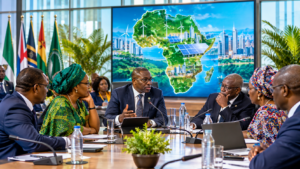
At a UN Economic Commission for Africa (ECA) side event at COP31, speakers asked how climate initiatives can survive a change of government. ECA Executive Secretary Claver Gatete said climate impacts already cost some African countries around five per cent of GDP, while high borrowing costs drain money needed for resilience and energy access. His three conditions for success were institutional ownership, financing and measurable results. In his words, an initiative needs a home beyond the president’s authority.
France’s climate envoy, Benoît Faraco, questioned the system itself. Only 20 per cent of investment goes to renewables, he said, and pouring more money into the same basket won’t produce more implementation. He called for better tracking of pledged money that actually reaches projects, and for shared European and African supply chains for batteries and solar equipment.
The Green Climate Fund’s Amer Baig said it now processes transactions within nine months and directs over 62 per cent of its adaptation finance to Africa and least developed countries.
What Real Estate Should Do With This
A $337 billion plan means contracts, infrastructure and demand for resilient, low-carbon buildings. Developers who understand the NDC priorities will be first in line for partnerships and green financing. Investors should ask the same questions of any climate programmed as of any deal: Who owns it? Where does the money come from? How will results be measured?
Nigeria does not lack ambition, but ambition needs ownership. The market will reward those who build for the Nigeria this plan is aiming at.