
Methane risk is now a property risk.
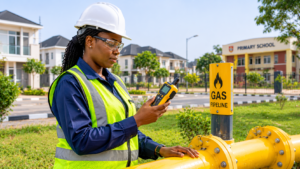
When children keep collapsing in classrooms, the story stops being only about health. It becomes a question about the ground we build on. In Ogun State, four gas incidents since April have put more than 200 pupils in hospital, according to the Punch Editorial Board, and the cause is still under investigation. In real estate, risk ignored at the start becomes cost at the end.
What We Know, and What We Don’t
Officials say early findings point to a natural geological source, with gas possibly escaping through underground faults and fractures. That is still preliminary, and the Punch editors rightly warn against settling on it too early. Silent pipeline leaks, abandoned wells, dumpsites, and industrial activity all still need to be ruled out.
The gas involved is methane. It is colorless, highly flammable, and easy to miss without detection equipment. It can also build up in enclosed spaces and displace oxygen. That makes it more than an environmental headline. It is a safety and liability issue for anyone who owns, builds, or manages property.
1.5% of climate finance. 100% of our children’s future.
Why Developers Should Care
Methane risk rarely appears in a standard site survey. Yet the editorial points to pipeline corridors, houses built on pipeline right-of-way, and dumpsites as real danger zones. Add Nigeria’s wider methane problem, with UNEP satellite data suggesting the country loses about 2.5 million tones a year, and you have a risk that lenders, insurers, and buyers will eventually price in.
Look at Eleme in Rivers State, where a gas leak sparked a fire that destroyed around 50 houses, along with market stalls and vehicles. A property near a hazard like that isn’t just cheaper. It can become very hard to insure and very hard to sell.
What Smart Developers Should Do Now
- Check every site against pipeline maps and known fault lines, and stay clear of pipeline corridors.
- Install gas detectors in schools, apartment blocks, and commercial buildings, and ventilate basements and enclosed spaces properly.
- Commission an independent site assessment before buying land near industrial areas or dumpsites.
- Treat any unusual smell or hissing sound as a real alert, and have an evacuation plan ready.
Good developers sell more than buildings. They sell safety. What lies underground matters as much as what we put on top, and the best time to ask hard questions about a site is before anyone moves in. Four incidents are already too many.