
Climate Driven Flood Risk and Nigeria’s Property Future
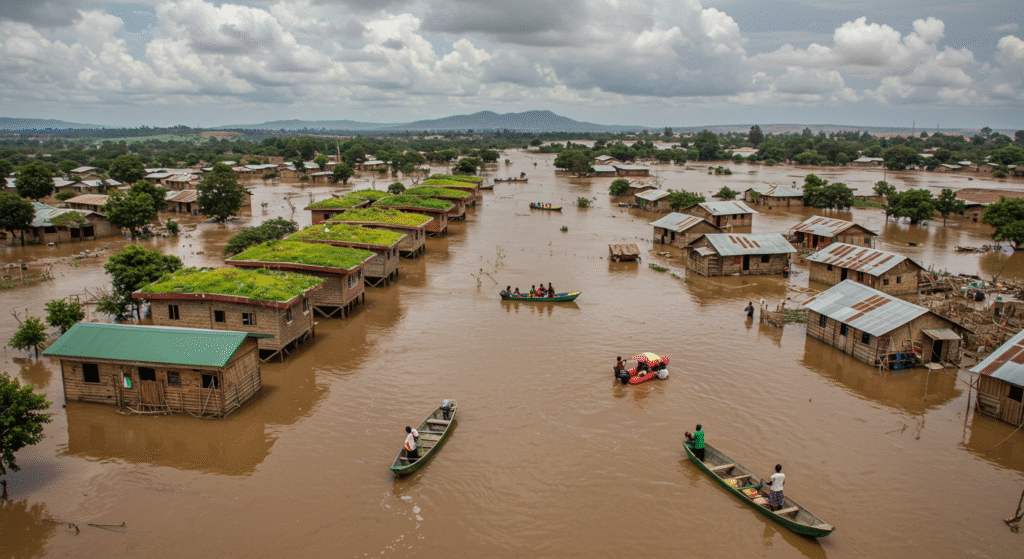
The reality of climate-driven flood risk is no longer a future concern, it is happening now. Across the world, floods are becoming stronger, more frequent, and less predictable. As a result, areas once considered safe are now experiencing severe flooding. For real estate investors and developers, this shift changes everything, from land valuation to building design.
Recent global flood events show that climate change is increasing rainfall intensity and expanding flood zones beyond traditional risk areas. Many record breaking floods have occurred in locations previously considered low-risk, meaning historical flood maps may no longer provide reliable guidance.
For Nigeria, where rapid urban growth already strains drainage systems and infrastructure, the implications are even more serious.
Nigeria’s Urban Expansion Meets a New Flood Reality
Nigeria’s major cities are expanding at unprecedented speed. Lagos, Port Harcourt, and Abuja already experience seasonal flooding. However, the emerging threat comes from intense rainfall flooding urban surfaces known as pluvial flooding.
Unlike river or coastal flooding, pluvial flooding occurs when rainfall overwhelms drainage systems. It can happen far from rivers and coastlines, making it harder to predict and manage. Climate change is increasing rainfall intensity, while poor drainage planning heightens vulnerability in rapidly growing cities.
As a result, real estate developments built using only traditional flood risk maps may face hidden exposure, creating long-term financial risks for investors and homeowners.
Why Real Estate Investors Must Change Strategy
Developers must move beyond location-based flood assumptions. Being outside a designated flood zone no longer guarantees safety.
Building design must also adapt. Elevated foundations, enhanced drainage systems, permeable landscaping, and flood-resistant materials are becoming essential rather than optional.
Insurance and financial planning must evolve as well. Businesses that ignore modern flood risks may face rising losses, operational disruptions, and reputational damage. Today, extreme weather affects current performance not just future projections.
Forward-thinking real estate companies in Nigeria are beginning to incorporate climate data, rainfall modelling, and surface water mapping into project planning.
Diaspora Property Wealth Nigeria: How Nigerians Abroad Invest Right
The Opportunity Hidden Inside the Risk
Although the threat is real, climate-driven flood risk also creates opportunity.
Green infrastructure, climate-smart housing, and resilient urban planning are increasingly attractive to global investors seeking climate-resilient assets. Nigeria has the potential to lead in climate resilient development across Africa if proactive measures are taken.
Collaboration between government authorities and private developers can modernize drainage systems, enforce smarter zoning regulations, and integrate resilience into urban planning frameworks.
Conclusion
Climate driven flood risk is reshaping how resilient real estate markets operate worldwide. Nigeria stands at a critical turning point.
If developers, investors, and policymakers act early, they can reduce losses, strengthen urban resilience, and unlock new green investment opportunities.
Ultimately, future property value will depend on how effectively climate driven flood risk is understood, managed, and integrated into development decisions today.
Pingback: Climate Health Early Warning Nigeria Cannot Ignore - Green Realty Africa
Pingback: How AI Flood Monitoring Is Reshaping Real Estate Risk in Lagos