
Nigeria’s Informal Settlements Are a Climate Time Bomb. Here Is Why Developers Should Care.
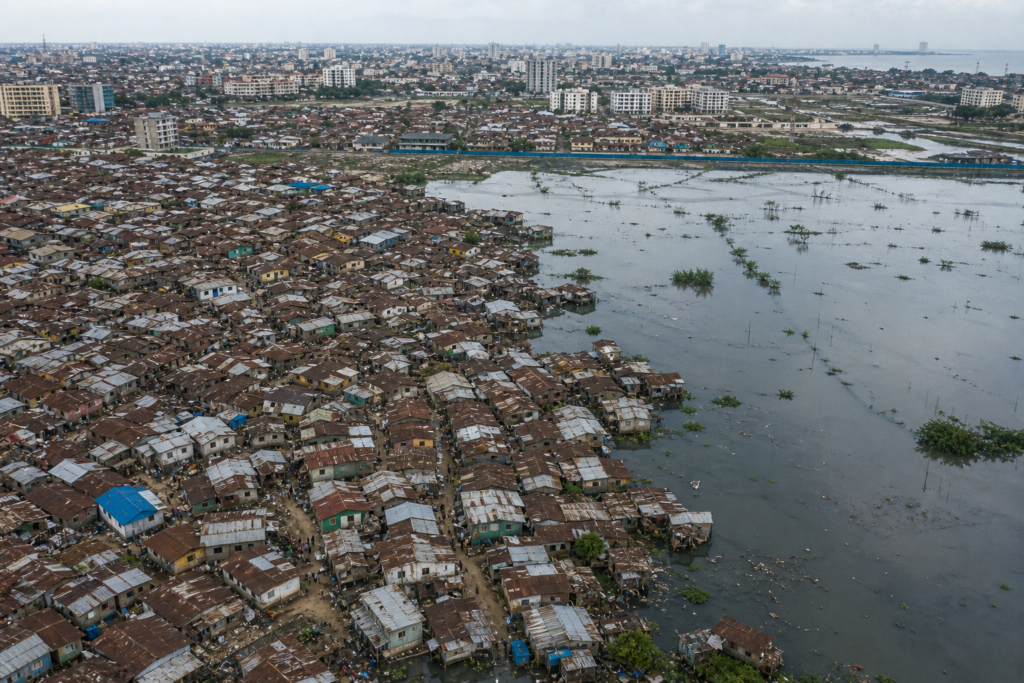
Informal settlements Nigeria climate risk is a conversation the real estate sector keeps avoiding. More than 60 percent of Lagos residents live in informal settlements. In Abuja, Kano, Port Harcourt, and virtually every major Nigerian city, the story is the same. Millions occupy land without formal title, in structures without climate consideration, and in locations without adequate drainage. These communities sit at the intersection of Nigeria’s housing crisis and its climate vulnerability. The real estate sector has largely treated them as someone else’s problem. That calculation is changing.
Where the Climate Risk Lives
Nigeria’s flood record tells a clear story. In 2022, flooding across 33 states displaced nearly 1.4 million people and destroyed tens of thousands of homes. The vast majority of those homes sat in informal settlements built on floodplains, on waterlogged land, without drainage infrastructure, without climate-conscious design. Every rainy season, the same communities pay the same price.
Climate projections make this worse. Rising temperatures across West Africa will increase extreme heat days significantly by 2060. Sea level rise threatens Lagos Island and coastal communities. Rainfall patterns are becoming less predictable, making flood risk harder to plan around. Informal settlements, built with none of these realities in mind, carry the highest exposure.
Climate Finance in Nigeria Real Estate: Are Developers Ready for the Shift?
Why Informal Settlements Nigeria Climate Risk Matters to Developers
However, this matters for the real estate sector for reasons beyond social responsibility. Informal settlements occupy significant portions of prime urban land in Nigerian cities. As cities grow and infrastructure investment follows, that land becomes valuable. Developers who engage with upgrading rather than demolition and displacement build community trust, reduce conflict risk, and access land opportunities that would otherwise remain out of reach.
International climate finance increasingly funds settlement upgrading programmes. The UN-Habitat Strategic Plan 2026–2029 specifically targets transforming access to land, basic services, and adequate housing in informal urban areas. Developers who position themselves within that framework as partners in upgrading rather than forces of displacement access a different kind of opportunity.
What Climate-Smart Upgrading Looks Like
Meanwhile, settlement upgrading does not mean luxury development. Drainage infrastructure reduces flood exposure directly. Passive cooling design cuts heat stress without relying on electricity. Compressed earth blocks and treated bamboo materials researchers in Kaduna and Lagos have already proven affordable and durable, replace costly imported options. Secure tenure gives residents something worth protecting and maintaining.
These are not radical ideas. They are practical responses to a problem that is growing faster than the industry is moving.
Conclusion
Ultimately, Nigeria’s informal settlements are not invisible to the real estate sector. They sit in the middle of every major city. The question is whether the sector engages with them as a challenge to be solved or a problem to be avoided. Climate pressure, international finance frameworks, and urban land economics are all pushing in the same direction. Engaging with informal settlement upgrading is not charity. It is strategy.
Niger Flooding Real Estate Crisis: Lives Lost, Futures Drowned