Nigeria’s Green Building Shift: Why Developers Can No Longer Ignore Sustainability
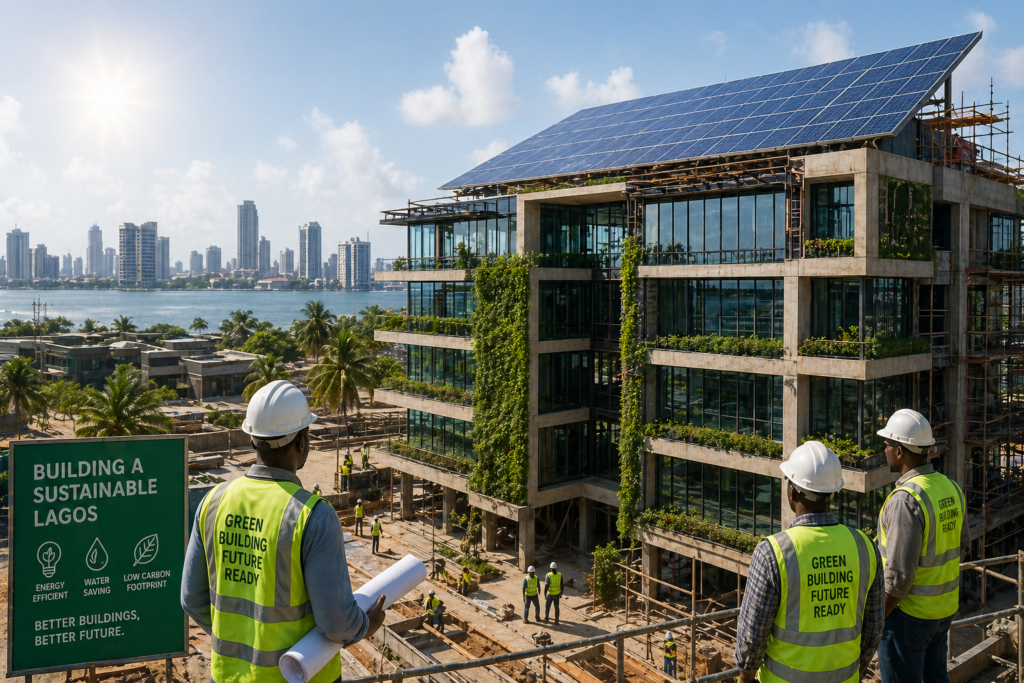
For years, Nigerian developers treated sustainability as a luxury. Green building was something for donor-funded projects or premium developments targeting foreign tenants. That thinking is now a liability.
Green building in Nigeria is no longer a niche conversation. Energy costs are rising. Climate risks are growing. Investor expectations are shifting. Developers who ignore these forces are not just missing a trend, they are falling behind a market that is actively moving without them.
The Cost Pressure Is Real
Diesel prices remain unpredictable. The national grid continues to underperform. Every developer running a generator-dependent building is absorbing costs that eat directly into margins.
Solar integration, energy-efficient lighting, and better insulation now solve two problems at once. They reduce carbon footprint, and they cut operating costs. Buyers and tenants notice this. A building that costs less to run is a building that is easier to sell, easier to fill, and easier to hold.
For investors, the math is straightforward. Lower operating costs mean stronger long-term returns. Green buildings are not just ethical, they are financially smarter.
Investor Expectations Have Changed
Global capital now moves with sustainability conditions attached. ESG criteria, Environmental, Social, and Governance standards now influence how international funds screen Nigerian real estate opportunities.
The Green Building Council Nigeria signed a major partnership with Sintali and the IFC in 2025 to accelerate EDGE green building certification across Nigeria. EDGE-certified buildings use at least 20 percent less energy, water, and materials than conventional builds. That standard is now on the table.
Developers who cannot demonstrate sustainability credentials risk losing access to funding. The divide in the market is forming quietly but firmly. On one side sit developers who are adapting. On the other sit those who are waiting and waiting is becoming a costly decision.
ESG-Driven Real Estate Transformation Is Redefining Nigeria’s Property Market
The Barriers Are Real But Not Insurmountable
High upfront costs remain the most common objection. Smaller developers feel this most sharply. Green materials cost more at procurement. Certification processes take time and money. These are genuine concerns.
But the Green Building Council Nigeria now offers the DGNB certification system, a globally recognised framework adapted specifically for Nigeria’s climate, construction realities, and material availability. It provides a structured, achievable pathway for developers at different scales. The barrier is lower than most assume.
Awareness is the other gap. Many developers still price sustainability as an expense rather than an asset. That framing is the problem. A green building holds value better, attracts better tenants, qualifies for better financing, and ages better than a conventional structure.
What Developers Must Do Now
Nigeria’s real estate sector does not have the luxury of waiting for a perfect policy environment. The market is moving. Climate pressure is real. Capital is conditional.
Developers must start integrating sustainability into project planning from the earliest stage, not as an afterthought, not as a marketing label, but as a structural decision that shapes materials, design, energy systems, and long-term cost models.
The Green Building Council Nigeria exists to support this transition. The EDGE certification pathway exists. The financing instruments are beginning to follow. What the sector needs now is the mindset shift to match the moment.
Conclusion
Nigeria’s green building shift is not a future event. It is happening now. Developers who move early gain access to better capital, attract more committed tenants, and build assets that hold value under pressure. Those who delay are not standing still they are falling behind in a market that has already started moving. The question in 2026 is not whether to go green. It is how fast.
Nigeria’s Real Estate Boom: Big Q3 Gains, Tougher Questions Ahead