
Flooding and Building Collapse Are Now Investment Risks, Not Just Weather Events
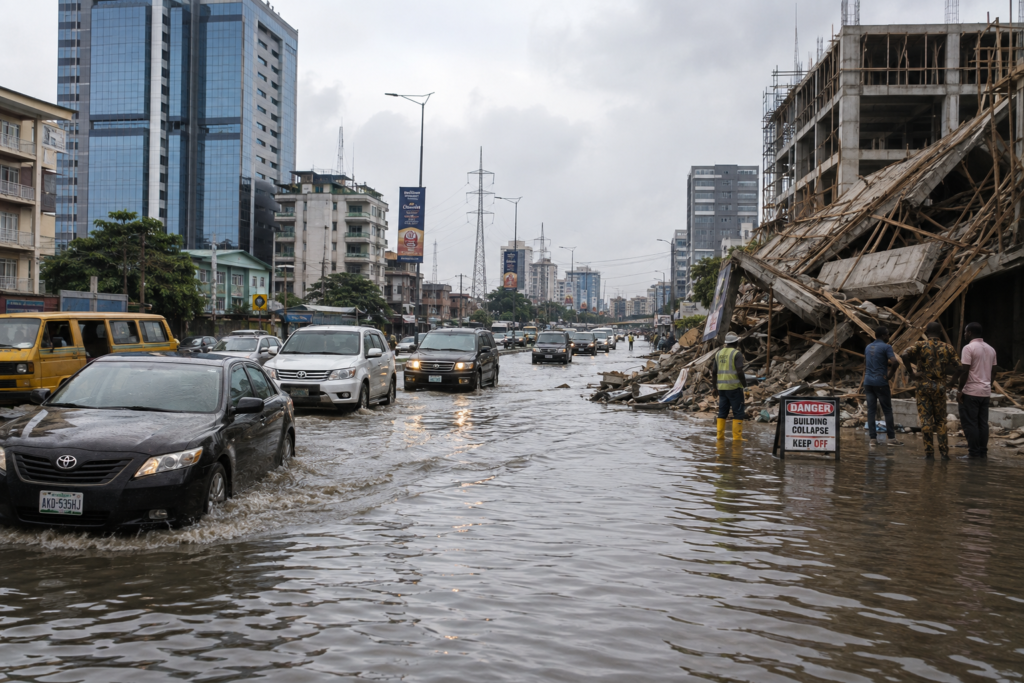
Flooding and building collapse have moved beyond isolated environmental incidents. According to Ogunseitan, an Estate Surveyor and Valuer writing in BusinessDay, they’re now critical investment risks shaping property valuation, insurance costs, mortgage financing, and investor confidence across Nigeria.
Why Lagos Is the Clearest Example
Lagos sits barely one to four metres above sea level. As a result, the city is naturally vulnerable to flooding. Climate change has intensified extreme weather globally, while rapid urbanisation piles more pressure onto Lagos’s infrastructure. Since the city faces both at once, recurring floods disrupt businesses, damage infrastructure, reduce property values, and expose weaknesses in urban planning and building enforcement.
A Shift in How Location Gets Valued
Location has traditionally hinged on prestige, accessibility, and commercial potential. Ogunseitan argues that climate resilience now belongs on that list too. In other words, a prime address that floods every rainy season no longer counts as a safe investment, regardless of its prestige.
What This Means Going Forward
Nigeria’s property market’s future competitiveness won’t rest on housing supply or investment incentives alone. Resilience matters just as much. Therefore, cities able to protect lives, safeguard investments, and withstand environmental shocks will draw more confidence from local and international investors.
Nigeria’s 2026 Flood Outlook Is Out. The Real Estate Sector Needs to Read It.
Why This Matters for Real Estate
This argument ties together a pattern GRA has tracked all year: NIHSA’s flood alerts, Lagos’s building collapses and demolitions, and the drainage enforcement drives in Agungi and Ajiran. These aren’t separate stories. Instead, they’re the same risk showing up in different forms across Nigeria’s largest property market.
Conclusion
The rainy season shouldn’t just be a weather forecast. It’s a signal. Building safely, planning wisely, and protecting the environment aren’t optional extras anymore; they’re baseline requirements for a resilient property market.
Nigeria’s Informal Settlements Are a Climate Time Bomb. Here Is Why Developers Should Care.
PRAISE SAMSON