
Record-Breaking Ocean Warming Event (El Niño) Threatens Nigerian Real Estate
Introduction
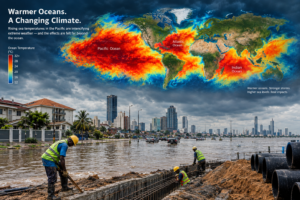
World leaders gathered in New York this week for Climate Week alongside the United Nations General Assembly, and the timing could not be more urgent. The World Meteorological Organization warned earlier this month that the current ocean warming event, known as El Niño, could become the strongest ever recorded, with nearly a hundred percent likelihood that it will persist through February. Prime ministers from Australia and Iceland used their platforms to push climate action even as other leaders stayed quiet, distracted by war and inflation. For Nigeria, a country already battling flooding, coastal erosion, and unpredictable rainfall, this record-breaking ocean warming event is not a distant headline. It is a direct threat to how homes, estates, and entire cities are planned and built.
What Makes This Ocean Warming Event Different
The World Meteorological Organization (WMO) Secretary-General Celeste Saulo told reporters in Geneva that current forecasts show warming so extreme that it could exceed anything scientists have observed in the past four decades. She explained that oceans absorb and release heat slowly, so the full impact of this El Niño event will continue to affect global temperatures well into 2027. The previous major ocean warming event in 2023 and 2024 contributed to the warmest year ever recorded, and scientists now expect that record could fall again. This matters for real estate because El Niño patterns intensify the exact conditions already stressing Nigerian cities: heavier rainfall in some regions, prolonged drought in others, and rising temperatures that increase energy demand for cooling buildings.
Why Nigerian Property Markets Cannot Ignore This Ocean Warming Event
Lagos already floods every rainy season because the city sits less than two meters above sea level with inadequate drainage infrastructure. An intensified El Niño means more extreme rainfall events landing on a drainage system that already struggles under normal conditions. Northern Nigeria faces the opposite risk, with drought patterns threatening agricultural land and pushing migration toward already overcrowded southern cities, increasing housing demand in areas poorly prepared to absorb it. Property developers who ignore this ocean warming pattern when choosing building sites, materials, and drainage designs are building assets that will lose value as extreme weather events become more frequent and severe. Insurance costs will rise. Repair costs will rise. Buildings without climate-resilient design will become financial liabilities rather than appreciating assets.
Your Building May Be Standing, But Is It Climate-Ready?
The Response Nigeria Needs Right Now
Climate Week discussions in New York centered on accelerating energy transitions and strengthening resilience ahead of this record-breaking ocean warming event. Nigeria needs the same urgency applied directly to its real estate and urban planning sector. This means enforcing building codes that account for flood risk, investing in drainage infrastructure before extreme rainfall arrives rather than after damage occurs, and requiring property developers to disclose climate risk to buyers the way Enugu State has begun requiring transparent land titles. Nigerian states that build climate resilience into housing policy now will protect both public safety and property values as this El Niño event intensifies global weather extremes over the coming years.
World leaders address climate crisis before UN meet amid record-breaking El Niño
Conclusion
The world’s leaders are treating this record-breaking ocean warming event as a serious global threat, and Nigeria’s real estate sector should follow that lead. Record-breaking heat, unpredictable rainfall, and intensifying drought are not abstract climate science discussions happening in Geneva and New York. They are forces that will determine which Nigerian properties hold their value and which ones flood, crack, or become uninsurable in the coming years. Developers, investors, and homebuyers who factor climate resilience into every decision today will be the ones protected when this El Niño event delivers its full impact through 2027 and beyond.