
Climate-Smart Real Estate Planning: Nigeria Must Stop Building for Yesterday’s Climate
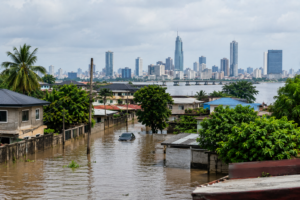
Lagos has received another seven-day flood warning, covering September 19–25, with authorities advising people in vulnerable low-lying and coastal communities to move to safer locations. Areas highlighted include parts of Eti-Osa, Lagos Island, Ajah, Kirikiri, Ilaje Waterfront and communities around the Ogun River corridor.
But here is the bigger story: this is not only about rain.
It is about real estate, land use and the future of Nigerian cities.
For years, we have treated flooding as a seasonal inconvenience. Yet the numbers are telling us something different. Recent research using rainfall data from 1983–2023 found increasing wet-season rainfall intensity in Lagos, while another 2026 study found that built-up areas expanded significantly as forests and water bodies declined.
The question is no longer whether Lagos will flood.
The smarter question is: what are we building, where are we building it, and can it survive the climate ahead?
The Real Estate Industry Cannot Ignore Climate Risk
A beautiful house in the wrong location is still a vulnerable asset. A commercial development without adequate drainage can become a financial liability. And a residential estate built on reclaimed or poorly drained land may carry risks that buyers only discover after heavy rainfall.
This is where climate-smart real estate planning becomes essential.
Nigeria needs developers, investors, surveyors, planners and policymakers to treat flood-risk data as seriously as location, road access and market demand.
The tools already exist.
Satellite imagery, GIS, rainfall records, flood-risk maps and predictive models can help identify safer development zones before construction begins. A recent Lagos study even developed GeoAI-based methods for identifying flood-sensitive areas and improving land-use decisions.
That changes the conversation.
Climate data should influence property decisions before money enters the ground, not after disaster strikes.
Nigeria’s Next Property Boom Must Be Resilient
Nigeria is still urbanising rapidly. That means enormous opportunities for housing, commercial property, infrastructure and new cities.
But growth without resilience can create expensive problems.
Developers should begin asking different questions: Is this land naturally flood-prone? Where does stormwater go? What happens when rainfall exceeds historical averages? Are wetlands being destroyed? Can the infrastructure withstand future climate pressures?
Government also has a role. Flood warnings must connect with land-use enforcement, drainage investment, emergency planning and transparent development information.
For investors, the lesson is equally important: climate risk is investment risk.
Nigeria does not need to stop developing. It needs to develop more intelligently.
Conclusion
The future of African real estate will not simply belong to those who build the most. It will increasingly belong to those who understand climate-smart real estate planning and build assets capable of surviving the realities of tomorrow.
Why Climate Financing Is Quietly Reshaping Nigeria Real Estate