
Is Nigeria Building Into a Climate Trap?
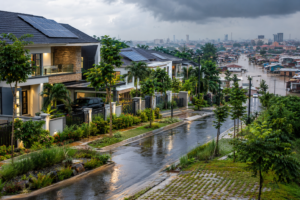
What if the most expensive mistake in Nigerian real estate is not buying the wrong property but building the right property in the wrong place? Every year, Nigerians watch roads disappear under water, homes become unsafe and businesses lose valuable assets. Yet construction continues at a remarkable pace. The recent News Central Africa documentary, Nigeria at 66: Climate Change, Disasters and Responses, brings this contradiction into sharp focus. From the devastating floods of 2022 to more recent disasters in Maiduguri and Mokwa, the message is becoming harder to ignore: as flooding and extreme heat intensify across Nigeria, climate resilience must become a fundamental criterion for real estate development and investment, because the properties we build today will determine how well Nigerian communities survive tomorrow’s climate risks.
The Floods Are Sending Property Investors a Warning
Nigeria’s recent flood history provides enough evidence to rethink how we develop cities. In September 2024, flooding following intense rainfall and the Alau Dam collapse devastated parts of Maiduguri and Jere in Borno State. NEMA reported that 414,176 people were affected, 389,267 were displaced and 7,155 houses were damaged.
Then came another serious warning in 2025. In July, flash floods hit parts of Maiduguri again, submerging homes and making roads impassable. NEMA specifically linked the damage to intense rainfall, poor drainage and construction along water channels.
Mokwa, Niger State, delivered perhaps the most painful reminder. In May 2025, catastrophic flooding killed at least 151 people, displaced more than 3,000 and affected hundreds of households. Two roads and bridges were also damaged, disrupting movement and economic activity.
These are not simply disaster-management stories. They are real estate stories. When floods destroy houses, roads, bridges, farms and businesses, they destroy wealth. A property that looks attractive on a brochure may carry hidden climate risks that only become visible when the rain comes.
Before You Buy That Property, Follow the Water
Heat Is Quietly Changing the Property Market
Flooding gets the headlines, but rising heat deserves equal attention. The Nigerian Meteorological Agency (NiMet) says nine of the ten years from 2016 to 2025 ranked among Nigeria’s 12 warmest years on record. In 2025, temperatures of at least 40°C were recorded in 23 Nigerian cities.
That should change the way we design buildings.
Developers cannot think only about land, foundations and finishes. They must also think about shade, ventilation, energy efficiency, landscaping, water management and materials that help buildings cope with heat.
NiMet’s 2026 seasonal prediction also projects above-normal temperatures across most of Nigeria, reinforcing the need to treat climate information as a planning tool rather than simply a weather forecast.
The New Definition of Valuable Property
This is where the Nigerian property industry faces a major opportunity.
The next generation of valuable property will not simply be property that looks good, sits in a desirable neighbourhood or promises high returns. Increasingly, it will be property that can withstand environmental shocks.
That means developers should consider flood exposure before acquiring land. Investors should ask questions about drainage and surrounding waterways. Homebuyers should understand the environmental history of a location. And planners must enforce rules that prevent construction from blocking natural water channels.
Nigeria will continue to build. The real question is what are we building for?
If we build only for today’s population and today’s climate, tomorrow’s weather may eventually expose the weaknesses in those investments. But if we make climate resilience part of Nigerian real estate thinking now, we can build communities that protect both people and capital.
Climate-resilient real estate is no longer a premium concept for the future. It is becoming part of the foundation of responsible property development today.