Nigeria’s Heat Emergency: Could the Homes We Build Be Putting Lives at Risk? Meta description: Discover how climate resilient Nigerian homes can protect public health, reduce extreme heat exposure and create lasting real estate value. Introduction: When Your Home Becomes a Health Risk Imagine returning home after a long day under Nigeria’s scorching sun, only to find that your living room feels just as hot as the street outside. For millions of Nigerians, this is an everyday experience. However, the growing threat of extreme heat makes it more than a comfort issue. It is becoming a public health concern. A recent Climate Impact Lab projection estimates that Nigeria could experience 31,400 additional heat-related deaths between September 2026 and February 2027. Globally, the estimate reaches 451,000. These are projected figures, not confirmed deaths, but they demand serious attention. For the property industry, the message is clear: climate resilient Nigerian homes are no longer a luxury. They are becoming essential to protecting lives and preserving property value. 1. Extreme Heat Is Exposing the Weakness of Nigerian Homes Nigeria is already experiencing uncomfortable temperatures. Recent Nigerian Meteorological Agency observations recorded 41°C in Nguru, Yobe State, and 34°C in Lagos. Unfortunately, many residential buildings offer little protection against extreme heat. Poor ventilation, metal roofing without adequate insulation, large unshaded windows and heat-absorbing construction materials can turn homes into heat traps. The problem becomes worse when electricity supply is unreliable. With approximately 87.3 million Nigerians lacking access to electricity, many households cannot depend on fans or air conditioning to stay cool. Consequently, older people, children, pregnant women and people working from home face additional risks. A property should provide shelter, not expose its occupants to dangerous temperatures. 2. The Real Estate Industry Must Rethink How It Builds Here lies a major opportunity for Nigerian developers. Instead of treating cooling systems as the primary solution, the industry must start designing buildings that naturally stay cooler. For instance, developers can use reflective roofing, insulated ceilings, shaded windows, cross-ventilation and strategically planted trees. These simple measures can reduce indoor temperatures and lower electricity consumption. Furthermore, estate planners should provide green spaces, accessible water points and shaded pedestrian walkways. These features improve outdoor comfort and make residential communities healthier. Importantly, climate-conscious construction does not always require expensive technology. Sometimes, the difference between a dangerously hot room and a comfortable one starts with the building’s orientation, window placement and choice of roofing materials. 3. A New Investment Opportunity Is Emerging As climate risks increase, property buyers will have more reasons to examine how buildings perform, not just how they look. Developers who invest in heat-resistant designs can attract health-conscious buyers, reduce energy costs and improve tenant satisfaction. Meanwhile, property investors should begin considering indoor temperature, ventilation and energy efficiency when assessing long-term value. Government agencies, financial institutions and construction professionals must also encourage building standards that prioritise climate resilience. Conclusion: Build Homes That Protect Lives Nigeria’s growing heat emergency is a warning the real estate industry cannot afford to ignore. Climate resilient Nigerian homes can reduce heat exposure, improve living conditions and protect property investments. Ultimately, the future of Nigerian real estate should not be measured by how many houses developers build, but by how well those houses protect the people living in them. The next generation of successful developers will not simply build bigger homes. They will build safer, cooler and healthier places to live. SEO and publishing details Focus keyphrase: climate resilient Nigerian homes 10 tags: Climate Change Nigeria, Extreme Heat Nigeria, Green Real Estate, Sustainable Housing, Climate Resilient Homes, Nigerian Property Market, Healthy Buildings, Energy Efficient Homes, Green Building Design, Real Estate Investment Image prompt: A striking, photorealistic architectural editorial image showing a modern climate-resilient residential development in Lagos, Nigeria, during a hot sunny afternoon. Feature contemporary Nigerian homes with reflective insulated roofs, deep shaded balconies, large strategically positioned windows, natural cross-ventilation, solar panels, mature shade trees and lush green landscaping. Show a Nigerian family relaxing comfortably in a naturally ventilated living space while the harsh sunlight falls outside. Visually communicate the contrast between heat exposure and climate-smart housing. Premium architectural magazine photography, realistic Nigerian setting, natural lighting, professional composition, 16:9 landscape, no text, no logos. Image caption: As extreme heat threatens public health in Nigeria, climate-smart homes can provide cooler indoor spaces, healthier communities and more sustainable property investments.
Nigeria’s Heat Emergency: Are the Homes We Build Putting Lives at Risk?
Picture coming home after a long day in the sun, only to find your living room as hot as the street outside. For millions of Nigerians, that is routine, and this year the stakes are higher. The Climate Impact Lab projects that Nigeria could see about 31,400 additional heat-related deaths between September 2026 and February 2027, as a powerful El Niño drives temperatures up. These are projections, not confirmed deaths, but they should get the attention of everyone who builds, sells, or finances property.
Our Buildings Are Part of the Problem
The same report estimates around 451,000 additional heat-related deaths worldwide between June 2026 and February 2027, with the heaviest toll expected in the Global South. Researchers describe this year’s heat as a preview of conditions that could become normal within the next few decades.
What happens indoors makes Nigeria’s risk worse. Uninsulated metal roofs, large unshaded windows, poor ventilation, and heat-absorbing materials turn homes into heat traps. Cooling is not a simple fix either. Even homes with electricity face power cuts, and more than 60 percent of people were estimated to live below the national poverty line in 2025. When a fan or air conditioner is neither affordable nor dependable, the building itself has to do the work. Children, older people, and pregnant women are the most exposed.
“Heat is the new flood risk for property.”
Design for Cooler, Not Just Cooling
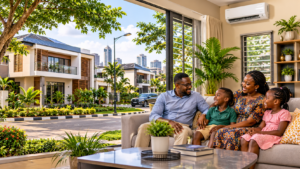
The smartest developers won’t treat air conditioning as the answer. They will design homes that stay cooler by default: reflective roofing, insulated ceilings, shaded windows, cross-ventilation, and trees planted where they cut the most heat. None of this needs exotic technology. Orientation and window placement cost very little at the design stage and can mean the difference between a dangerous room and a livable one.
At estate level, shaded walkways, green spaces, and accessible water points make whole communities safer.
A New Measure of Property Value
Buyers and tenants will soon ask how a building performs in a heatwave, not just how it looks. Developers who get ahead of that will cut running costs, raise tenant satisfaction, and protect resale value. Heat resilience also lowers energy bills, which matters when power is costly or unreliable.
Investors should start asking about indoor temperature, ventilation, and energy efficiency during due diligence. Lenders and regulators can speed this up by rewarding resilient design through clear building standards.
I would measure the future of Nigerian real estate not by how many homes we build, but by how well they protect the people inside. The developers who win the next decade will build homes that are safer, cooler, and healthier to live in.