
Climate talks decide who funds resilient cities.
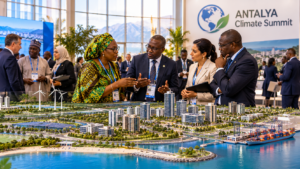
What COP31 Means for African Real Estate
COP31 in Antalya is heading toward its final day on November 20, and the familiar debate is back: rich countries, poor countries, and who pays. It can sound far from a construction site in Lagos or Enugu. It isn’t. The outcome will shape who funds the drainage, roads, and resilient housing that climate-exposed African cities badly need.
Progress, but Not a Deal Yet
Negotiators report agreement on 48 items, with about 30 mandates still open as week two began. That is movement, not 48 new commitments. The first draft of the political cover decision, circulated on November 16, is still only a negotiating text. It was compiled from proposals by negotiating parties rather than agreed text, and it calls for tripling adaptation finance to at least $120 billion by 2035.
Keep the bigger picture in mind too. COP29 set a goal of at least $300 billion a year for developing countries by 2035. Many of those countries still question whether the money will be enough, arrive on time, and come as grants rather than debt.
Why Property Professionals Should Pay Attention
Flooding, coastal erosion, extreme heat, and shifting rainfall are not abstract risks. They hit land values, insurance costs, mortgage lending, and construction budgets. Adaptation finance, if it arrives in a usable form, pays for the drainage, early warning systems, and climate-ready infrastructure that neighborhoods depend on.
But money follows ready projects. Countries that arrive with well-designed, investment-ready plans will attract support, and those that don’t will watch it go elsewhere. Nigeria’s hydrological agency shows the potential here, since turning river and rainfall data into early warnings protects both lives and property.
Why the ₦20bn North-West climate push matters to property investors
What Developers and Investors Can Do Now
Ask your engineers for flood-risk maps before you ask your agents for prices. Design for heat and drainage from day one. Work with local authorities on resilient infrastructure so your projects are bankable when funding opens up.
Watch the just transition debate as well. Reliable power, clean cooking, and new green jobs will change what tenants and buyers expect from a home.
The real test of COP31 is what happens after the delegates go home, and the same is true for us. Promises don’t flood-proof a building. Good design does.