
Clean Energy Real Estate: How Nigeria Can Turn Climate Innovation into Wealth
Introduction: The Opportunity Nigeria Cannot Afford to Miss
Clean Energy Real Estate could become one of Nigeria’s most important economic opportunities. In his work on accelerating energy innovation, Bill Gates makes a powerful point: inventing cleaner technologies is not enough. We must make them affordable, invest in them, and bring them to the people who need them.
For Nigeria, this argument goes beyond solar panels. It touches the homes we build, the materials we use, the cost of running businesses, and the future of our cities. With unreliable electricity and growing climate risks, the question is no longer whether Nigeria needs innovation. It is whether we can turn that innovation into productive assets, jobs, and lasting wealth.
- Beyond Solar Panels: Rethinking Nigerian Buildings
Nigeria has abundant sunshine, yet many homes, offices, hospitals, and shopping centers still depend on petrol and diesel generators. This raises operating costs, creates pollution, and makes everyday life more expensive.
The Nigerian Investment Promotion Commission identifies solar power as a major opportunity, with estimated solar potential reaching 427 gigawatts. However, potential alone does not power a building. We need investment in panels, batteries, reliable distribution systems, and skilled local installers.
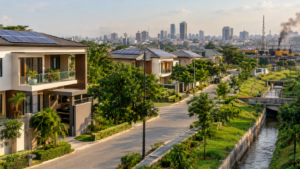
Meanwhile, developers can design buildings that use less energy from the beginning. Better ventilation, shaded windows, reflective roofs, efficient lighting, and suitable building materials can reduce cooling needs. When developers combine these features with solar power and energy storage, they can lower running costs and improve the value of their properties.
The lesson is simple: the greenest energy is not only the energy we produce cleanly, but also the energy our buildings no longer waste.
Is Nigeria Building Into a Climate Trap?
- Financing Innovation: Where the Real Estate Market Comes In
Gates’ approach highlights a difficult truth: promising technologies often struggle because they cost too much at the beginning. Investors need ways to reduce that risk and help successful solutions reach larger markets.
Nigeria’s Energy Transition Plan estimates that achieving net zero by 2060 requires about $410 billion in additional investment compared with business-as-usual spending. This figure covers the wider economy, not real estate alone, but it reveals the scale of the financing challenge.
Property developers, banks, pension funds, and government agencies can respond through green building loans, energy-performance contracts, public-private partnerships, and financing for rooftop solar. Developers can also test new materials and construction methods before expanding successful projects.
Consider a housing estate where residents share a solar-powered mini-grid. Instead of every household buying and maintaining a generator, the estate operates a central system with shared costs. Such a model could reduce noise, fuel dependence, and household energy expenses while creating a new service business.
However, investors need credible data, clear regulations, reliable maintenance, and repayment models that work for ordinary Nigerians. Green investment must make financial sense, not simply look attractive in a brochure.
- Building Climate-Resilient Cities and Local Wealth
Nigeria’s climate challenge is also a property challenge. Flooding threatens homes, roads, businesses, and public infrastructure. Poor drainage, uncontrolled development, and unsuitable building locations can turn heavy rainfall into expensive disasters.
Therefore, climate-smart development must combine clean energy with proper land-use planning, flood-risk mapping, effective drainage, urban trees, and stronger building standards. Developers should assess environmental risks before purchasing land, not after construction begins.
At the same time, Nigeria should develop local industries that supply solar components, batteries, efficient building materials, and energy-management systems. This can create jobs, strengthen technical skills, and keep more economic value within the country.
The opportunity is bigger than reducing emissions. It is about building places that cost less to operate, withstand climate pressures, and create long-term value for owners and communities.
Conclusion: Nigeria Must Build for the Future
Clean Energy Real Estate offers Nigeria a practical path towards lower energy costs, stronger property investments, and more resilient cities. But progress requires more than good intentions. It requires smart policies, patient capital, reliable data, local innovation, and developers willing to think beyond immediate construction costs.
The real question is not whether Nigeria can afford climate-smart development. It is whether we can afford to keep building without considering the cost of energy, environmental damage, and future climate risks.
Nigeria’s next generation of valuable properties must do more than provide shelter. They must save energy, protect communities, and create wealth.