
Nigeria Coastal Property Risks: Lessons from England’s Vanishing Homes
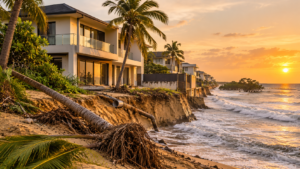
Picture putting your life savings into a house, then watching the land beneath it wash away. I have seen enough property cycles to tell you this is not a freak event. It is a pricing problem, and it sits at the heart of Nigeria coastal property risks. The Guardian reported that coastal erosion and landslides forced the demolition of at least 183 homes in England over 16 years. For Nigeria, that is not a distant story. It is a preview of what unchecked coastal investment can cost.
England’s Warning: When a Property Becomes a Liability
According to the Guardian’s figures, authorities demolished 66 homes in East Riding of Yorkshire and 64 in Great Yarmouth. These were not abandoned ruins. They were homes people bought in good faith. England’s Environment Agency estimates that 3,500 properties could face coastal erosion by 2055, rising to more than 10,000 by 2105.
The lesson is blunt: owning property does not guarantee lasting wealth when environmental risk goes unchecked. Location, title documents and expected returns all matter, but they are not enough.
Nigeria Nature-Smart Real Estate: Why Protecting Nature Makes Better Property Investments
Nigeria’s Coastline: A Risk Investors Cannot Ignore
Lagos and parts of the Niger Delta face similar pressure. A World Bank assessment of Lagos found that 86% of the state’s coastline is affected by erosion. Anyone buying or developing coastal land should pause on that number. As waves eat into the shore, owners can face falling land values, structural damage, costly protection works or forced relocation.
Climate change makes it worse through rising seas and shifting storm patterns. So do sand mining, poorly planned construction and the destruction of natural barriers like mangroves. Not every coastal plot carries the same danger, though. Smart buyers demand location-specific assessments, not assumptions built on a pretty view or a rising price tag.
Building a Safer Future for Real Estate
Climate risk belongs in every serious investment decision. Developers should commission environmental assessments, study shoreline change and stay away from high-risk areas unless proper safeguards are in place. Governments must enforce planning rules, improve coastal risk maps and support communities that may need to relocate. Protecting mangroves and other natural barriers also lowers exposure. The Federal Ministry of Environment already has a department for erosion and coastal zone management, so the structure exists. What is needed is stronger enforcement and real cooperation with developers.
The loss of homes in England shows what happens when environmental threats turn into property crises. Addressing Nigeria coastal property risks now lets us protect homeowners, preserve value and build resilient communities. The smartest investment of the next decade will not be the one with the best view. It will be the one built on informed decisions and solid ground.