
Clean energy isn’t Africa’s problem. Capital is.
When more than 190 countries gather in Antalya, Türkiye, from 9 to 20 November for COP31, the headline will be climate. The real story is capital. I’ve spent my career following money, and it always shows you who gets to build and who gets left waiting.
The Tools Are Here. The Access Isn’t.
Technology is no longer the bottleneck. A decade ago, fewer than one in 100 new cars sold worldwide was electric. In 2025 it was one in four. The world added over 600 gigawatts of solar last year, and global battery storage is now 11 times what it was in 2021.
Yet emerging and developing economies outside China, home to nearly two-thirds of the world’s people, drew just 18 per cent of clean energy investment. The panels and batteries are identical. The cost of financing them isn’t, and in developing markets it can run several times higher.
UN climate adviser Selwin Hart says the task now is removing the barriers to implementation, with finance that doesn’t pile more debt onto strained economies. He also sees the expected breach of the 1.5°C threshold as “overshoot, not surrender,” a reason for more urgency, not less.
Nigeria Nature-Smart Real Estate: Why Protecting Nature Makes Better Property Investments
What This Means for Nigeria
Nigeria sits at the sharpest end of this gap. Around 86 million Nigerians lack electricity, the largest number of any country in the world. That’s a market failure, and it’s also a business opportunity.
There’s real movement. The World Bank-backed DARES programme aims to bring solar home systems and mini-grids to over 17.5 million Nigerians and replace more than 250,000 diesel generators. Nigeria also installed 803 MW of new solar in 2025, taking total capacity to about 1.19 GW. That’s progress, but it’s still a fraction of what 230 million people need.
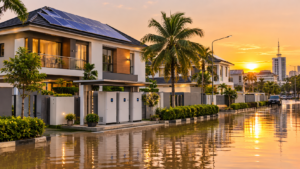
Climate risk is rising at the same time. With a powerful El Niño expected to intensify impacts, flooding and heat will keep testing our cities and the buildings in them. At COP31, Nigeria should push for affordable, concessional finance that doesn’t deepen debt, because high borrowing costs choke off projects before they start.
What I’d Tell Every Developer
Don’t wait for Antalya to decide your strategy. Build solar-ready and storage-ready. Design for flooding and heat from day one. Treat reliable power as part of your asset’s value, not an add-on.
Summits produce pledges, but properties are what turn pledges into reality. The developers who plan for resilience now will own the most valuable assets of the next decade.