
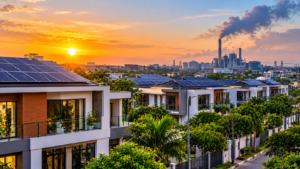
Clean energy powers buildings. Not promises.
Why Campaigners Rejected the COP31 Draft?
Before COP31 collapsed, climate campaigners were already saying no. 350.org urged governments to reject the proposed cover decision, calling it a gift to the fossil fuel industry. The draft was never adopted. 350.org’s Savio Carvalho later said countries had avoided a worse outcome by rejecting proposals that could allow continued reliance on fossil fuels. The objections are still worth understanding, because they shape the rules and money behind the buildings we put up.
What 350.org Objected To
The group raised four main concerns:
- Carbon capture: The draft pushed carbon capture and removal toward one billion tones by 2035, which critics say could give polluters a reason to keep producing.
- Fossil fuels: The text did not explicitly mention transitioning away from coal, oil, and gas. It only pointed indirectly to the COP28 outcome.
- Electrification: A “35 by 35” target called for the greatest possible use of clean energy, but did not require that new electricity come from renewables.
- Adaptation finance: The $120 billion annual target disappeared, and decisions on the baseline were pushed to 2027.
Nigeria Policy Shift Is Quietly Reshaping Real Estate Costs and Opportunities.
-
Why This Matters for Property
Energy comes first. If global electrification is not tied to renewables, buildings could stay locked into costly, dirty power. In Nigeria, where World Bank data put electricity access at 62.5 percent in 2024, cheaper solar and storage can change what a building costs to run.
Land comes second. 350.org warned that large-scale carbon removal could fuel land grabbing and pressure on communities, forests, and ecosystems. Anyone buying or developing land should ask hard questions about who is using it and for what.
Third is money for resilience. With no firm adaptation target, the flood defenses, drainage, and resilient infrastructure that protect property values may depend more on domestic funding than we would like.
What Developers Should Do Now
Don’t bank on carbon-capture promises alone to solve your energy costs. Plan for solar, storage, and efficient design instead. Do careful due diligence on land that could be targeted by offset or removal projects. And build resilience into your budgets from the start, rather than waiting for climate finance to arrive.
The summit failed to agree, but the direction of travel is clear. The buildings that last will be the ones designed for cleaner, cheaper energy and a harsher climate now and in the future.