
Nigeria’s Housing Crisis Has Reached Port Harcourt. The Numbers Are Alarming.
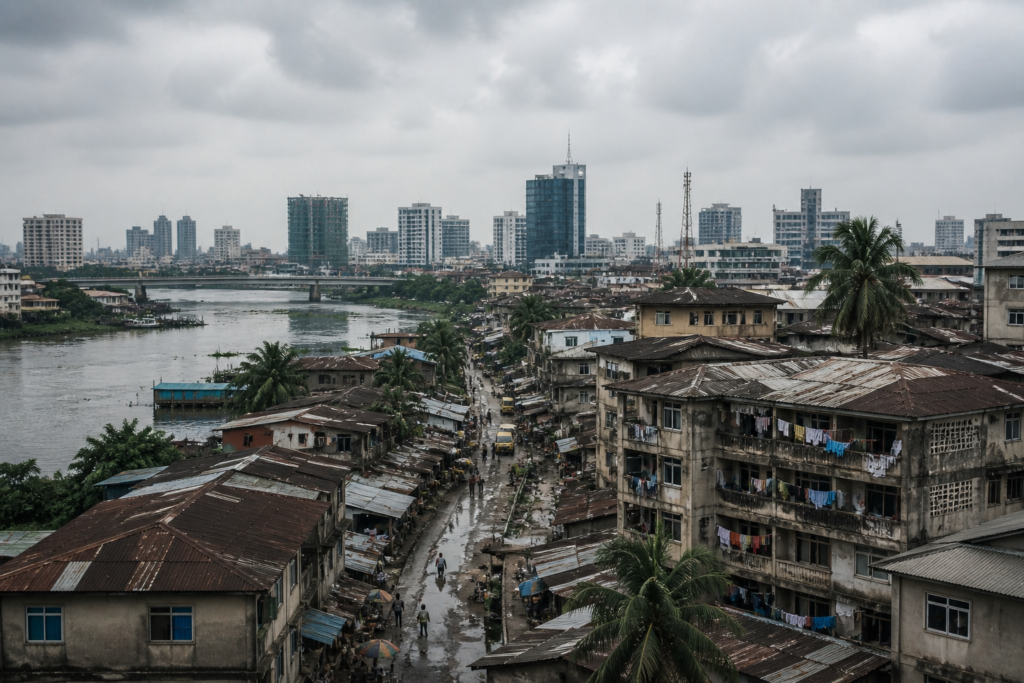
There is a number that stopped a lot of people this week. According to a recent housing assessment, some Rivers State residents are spending over 100% of their income on rent.
Not 40 percent. Not 60 percent. More than everything they earn just to keep a roof over their heads. That figure came out of a recent housing assessment tracking rental affordability across Nigeria’s major cities. And while Lagos and Abuja have dominated the housing crisis conversation for years, what is happening in Port Harcourt deserves its own reckoning.
When Rent Exceeds Income
The mechanics of this are worth sitting with. When rent consumes more than a person earns, survival depends on debt, on family support, or on compressing every other expense, food, transport, healthcare, children’s education to a level that is simply not sustainable. These are not abstract statistics. They describe the daily arithmetic of millions of people in a city that sits on one of the most resource-rich regions on the continent.
Port Harcourt’s rental market has been under pressure for years. The oil and gas economy created a two-tier city premium properties catering to expatriates and senior industry workers on one side, and an underserved majority scrambling for whatever remains on the other. As the oil sector has contracted and more Nigerians have moved into the city seeking opportunities, that pressure has intensified without a corresponding increase in housing supply.
Landlords have responded the way landlords respond to scarcity. They raise rents. And they keep raising them.
This Is Not Just a Port Harcourt Problem
What Rivers State exposes is the geography of Nigeria’s housing crisis. The conversation has been too Lagos-centric for too long. Abuja gets attention because it is the capital. Lagos gets attention because of its scale. But the housing affordability crisis is not confined to those two cities. It runs through Port Harcourt, Kano, Ibadan, Enugu, and virtually every urban centre where population growth has outpaced housing supply and where wages have not kept pace with the cost of shelter.
The Federal Government’s response so far has been to focus on housing construction targets. The Renewed Hope Housing Initiative is building units. The Federal Mortgage Bank is being recapitalised. These are steps in the right direction. But construction targets do not automatically translate into affordability. A thousand new units built for the wrong income segment solves nothing for the Rivers State resident spending 100 percent of their income on rent today.
What Affordability Actually Requires
Closing this gap requires more than supply. It requires the right supply, in the right locations, at the right price points, with financing structures that match the income realities of the people who need housing most.
That means rent-to-own schemes designed for workers earning below ₦200,000 a month. It means tenant protection frameworks that prevent arbitrary rent increases without notice. It means incentivising developers specifically to build for the bottom 60 percent of the income distribution not just through rhetoric, but through tax relief, land allocation, and access to single-digit interest financing.
The housing sector cannot keep treating affordability as a secondary consideration. In Rivers State, it has become the primary emergency.
Nigeria’s Rental Crisis Is Getting Worse. Nobody Is Talking About It Enough.
Conclusion
A city where residents spend more than their entire income on rent is not a city with a housing problem. It is a city in housing emergency. Rivers State has reached that point. And if the warning is not taken seriously now with policy responses that match the scale of the crisis, other Nigerian cities will follow. The data is already pointing in that direction.
Smart Money Is Moving Into Nigerian Real Estate. Here Is Where It Is Going.