
Nigeria Told Global Investors It Is Ready for Green Money. Now It Has to Prove It.
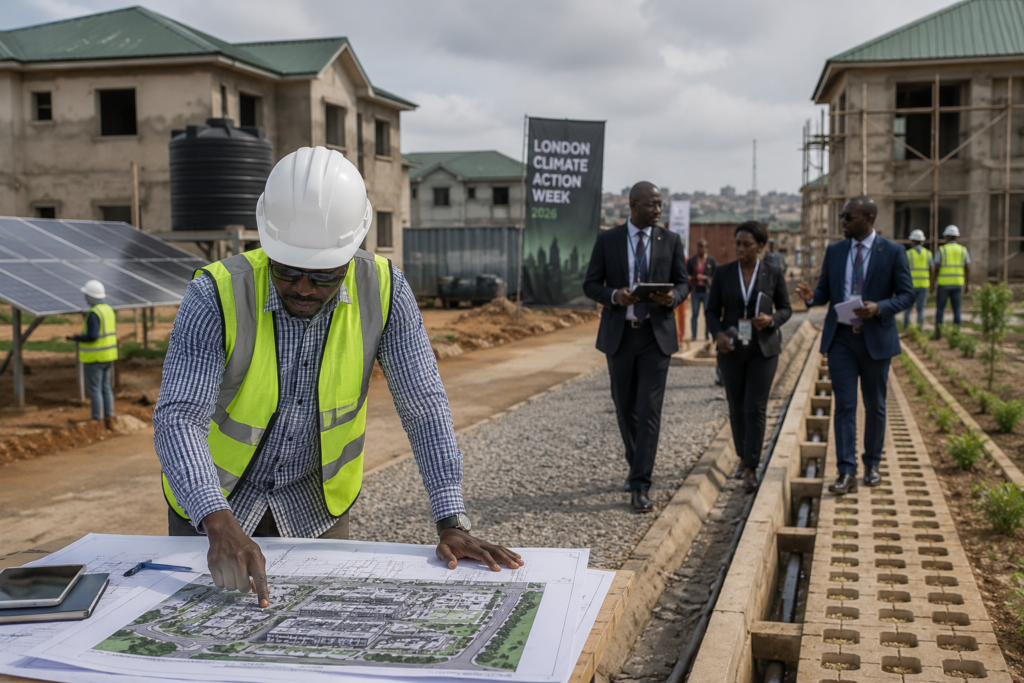
For years, Nigeria has had a climate agenda, what it has not had at least not consistently, is a pipeline of projects that can actually absorb the investment that agenda is supposed to attract.
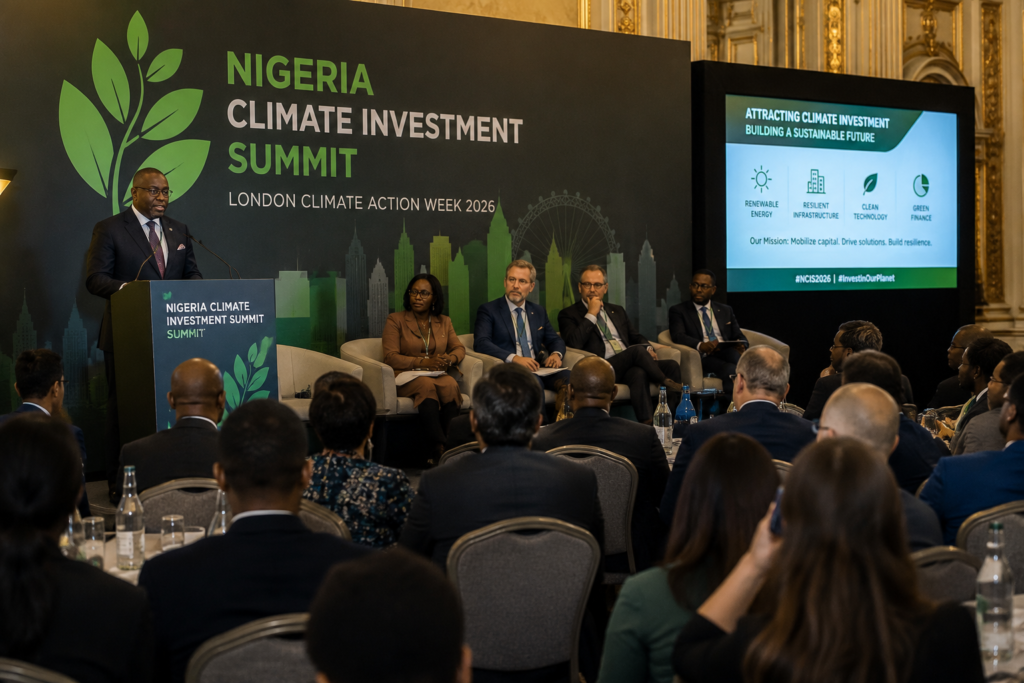
That gap was the subject of a direct message delivered at the Nigeria Climate Investment Summit during London Climate Action Week 2026. Deputy Speaker of the House of Representatives, Rt. Hon. Benjamin Okezie Kalu, told the global investment community something specific: Nigeria is ready to convert its climate commitments into commercially viable projects. The ambition is real. The pipeline is forming. And the country wants capital to follow.
The question the room did not fully answer and the question that always follows announcements like this, is whether the implementation will match the pitch.
What Nigeria Is Putting on the Table
The sectors Kalu highlighted are not abstract. Solar mini-grids. Battery storage. Clean cooking technologies. Electric mobility. Resilient housing. Flood control systems. Circular economy initiatives. Climate-resilient infrastructure.
These are not experimental ideas. They are proven investment categories in other markets that have simply not been deployed at meaningful scale in Nigeria. The argument being made in London is that the conditions to do so, legislative frameworks, policy clarity, and political will are now in place.
The Climate Change Act and the Electricity Act were both cited as foundations for investor confidence. Blended finance models. Partnerships with development finance institutions. Risk-reduction mechanisms for capital that might otherwise stay on the sidelines.
For the real estate sector specifically, the implications are significant. Resilient housing and climate-smart infrastructure sit explicitly within the investment pipeline Nigeria is describing. Developers who can structure projects around these categories, with the documentation, governance, and environmental credentials that institutional investors requires are developers who can access a category of capital that has historically not been available to the Nigerian market.
Smart Money Is Moving Into Nigerian Real Estate. Here Is Where It Is Going.
Why This Moment Is Different
Nigeria has made climate investment pitches before. What is different about 2026 is the combination of factors sitting behind the announcement.
The global pressure on institutional investors to demonstrate ESG alignment has intensified. Pension funds, sovereign wealth funds, and development finance institutions are not just looking for green projects, they are under regulatory and beneficiary pressure to find them. Africa, with its enormous infrastructure deficit and growing climate vulnerability, represents both the need and the opportunity.
Meanwhile, Nigeria’s legislative environment has shifted. The Climate Change Act creates accountability frameworks. The Electricity Act opens the energy sector to private investment in ways that were previously blocked. These are not cosmetic changes. They are the kind of structural reform that investors require before committing long-term capital.
The research by the Global Real Estate Engagement Network showing 78 percent of listed real estate companies now have carbon reduction targets is relevant here. That capital needs somewhere to go. Nigeria is making the case that some of it should come here.
The Gap Between Pitch and Delivery
None of this means the work is done. In fact, the harder work starts now.
Attracting climate finance requires more than announcing readiness. It requires project preparation, the detailed feasibility work, environmental assessments, financial modelling, and governance structures that make a project investable rather than just interesting. Nigeria has historically struggled with this stage. Projects that sound compelling in a conference room stall in the implementation phase because the groundwork was not done.
Transparent governance is the other critical variable. International investors have long memories about Nigeria. Capital that has been burned by regulatory uncertainty, contract disputes, or governance failures does not return quickly. The credibility of what was said in London will be measured against what happens on the ground over the next 12 to 24 months.
For the real estate sector, this means getting ahead of the process rather than waiting for investment to arrive. Developers who are already building to green standards, already pursuing certification, already maintaining the documentation that institutional investors require, those are the developers who will be positioned to benefit when the capital starts moving.
Nigeria’s Green Building Shift: Why Developers Can No Longer Ignore Sustainability.
Conclusion
Nigeria’s message at London Climate Action Week 2026 was the right one. Climate ambition without bankable projects is just a speech. Bankable projects without the governance to deliver them are just a pitch. What comes next, the preparation, the transparency, the execution, will determine whether this moment becomes a turning point or another announcement that the market files away and waits to see. The opportunity is real. So is the test.
Nigeria’s Flood Risk Real Estate 2026: What the Outlook Means.