
A Rainstorm Destroyed Over 100 Homes in Plateau State. The Real Question Is Why They Were So Vulnerable.
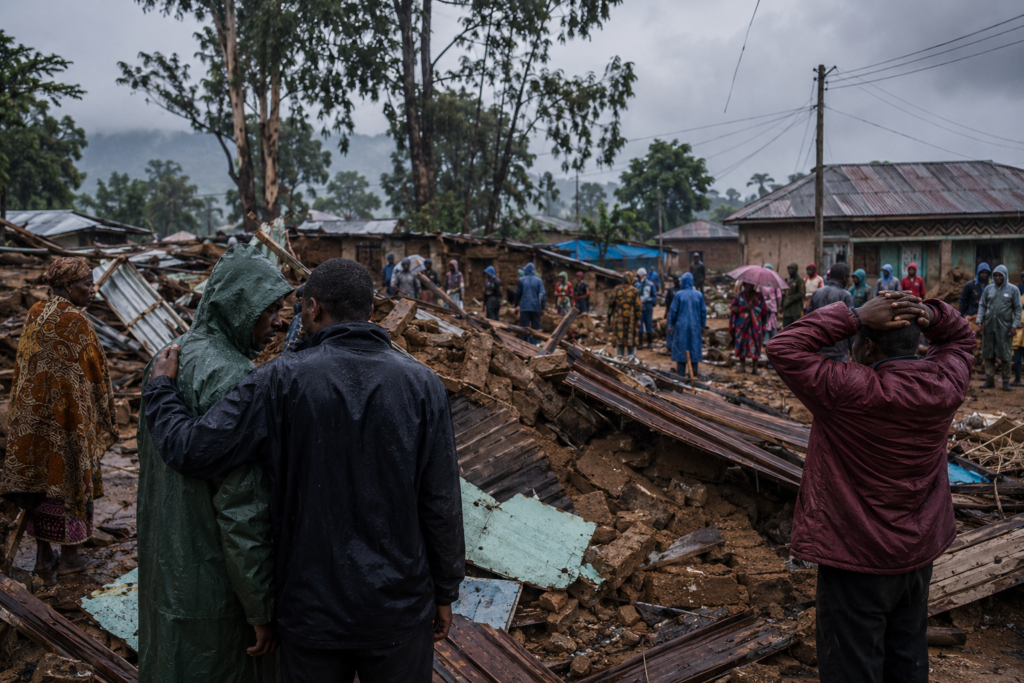
Climate resilient housing Nigeria communities need urgently and a rainstorm in Plateau State just made that case impossible to ignore.
A rainstorm should not be able to destroy a community.
But in Tom Gangare, Riyom Local Government Area of Plateau State, that is exactly what happened. Heavy rainfall and powerful winds tore through the community, destroying more than 100 homes, damaging health facilities, places of worship, and critical infrastructure. Families lost not just property, they lost the place they called home, often with nothing left to return to.
The emergency response matters. Relief materials, temporary shelter, food support, these are urgent and necessary. However, there is a harder question sitting underneath the immediate crisis that Nigeria keeps avoiding every time a storm like this hits.
Why are so many Nigerian homes still unable to survive a rainstorm?
The Vulnerability Is Not Accidental
Tom Gangare is not an unusual case. It is a representative one.
Across Nigeria’s rural and semi-urban communities, housing has been built with minimal consideration for the climate conditions it sits in. Roofing materials cannot withstand high wind speeds. Foundations offer no resistance to waterlogging. There is no drainage infrastructure to manage heavy rainfall. Building standards at the community level are rarely enforced to ensure what gets built can actually last.
When extreme weather arrives and it is arriving more frequently and more severely across the Sahel and central Nigeria, these structures do not just sustain damage. They collapse entirely. And the families inside them are left with nothing.
In reality, this is not a natural disaster problem. It is a construction and planning problem that extreme weather exposes.
Climate Is Changing. Construction Has Not.
Nigeria’s climate is shifting in ways that are well documented. Rainfall patterns are becoming less predictable. Wind events are becoming more intense. The rainy season that communities in Plateau State have planned around for generations is no longer behaving the way it used to.
Meanwhile, the way most Nigerians build particularly in rural and semi-urban areas has not changed to reflect that reality. The same materials. The same techniques. Drainage planning is still absent. Roofing systems that were marginal in a stable climate are genuinely inadequate in the one that is emerging.
Climate-resilient housing does not require expensive imported technology. It requires attention to fundamentals. Stronger roofing systems anchored properly to wall plates. Building materials that absorb rather than resist wind stress. Drainage channels that redirect water away from foundations. Strategic management of trees near structures. These are not radical interventions. They are basic building science applied to the climate conditions that actually exist.
After all, the cost of getting these things right at the construction stage is a fraction of the cost of rebuilding after a storm. The families in Tom Gangare understand that calculus better than anyone right now.
Nigeria’s Flood Risk Real Estate 2026: What the Outlook Means.
Who Is Responsible
The answer is not simple. Furthermore, it is not just government
Local government authorities have planning and building approval mandates that rarely reach rural communities with the consistency needed to make a difference. State governments have disaster response frameworks that activate after destruction rather than before it. The Federal Government has climate adaptation commitments under the Paris Agreement and the National Adaptation Plan that have not yet translated into community-level housing standards that would have protected Tom Gangare.
Developers, urban planners, and the real estate industry also carry responsibility. The climate-resilient construction conversation in Nigeria has concentrated in premium urban developments, green buildings in Lagos and Abuja targeting international tenants and ESG-linked financing. That conversation has barely reached the communities where the majority of Nigerians actually live.
Clearly, resilience cannot be a premium feature. It has to be a baseline standard, applied as consistently in Riyom as it is in Victoria Island.
Conclusion
The families in Tom Gangare will rebuild. Communities always do. But they will rebuild into the same vulnerability unless something changes in how Nigeria thinks about housing and climate at the community level. Indeed, every destroyed roof is not just a humanitarian emergency. It is evidence of a construction and planning system that has not kept pace with the climate its buildings must now survive. That gap is closeable. The question is whether the right people will ultimately treat closing it with the urgency it deserves.”
Extreme Heat Nigeria Real Estate: Buildings Are Not Ready.