West Africa Is Getting Hotter Faster Than Almost Anywhere Else on Earth. Nigeria’s Buildings Are Not Ready.
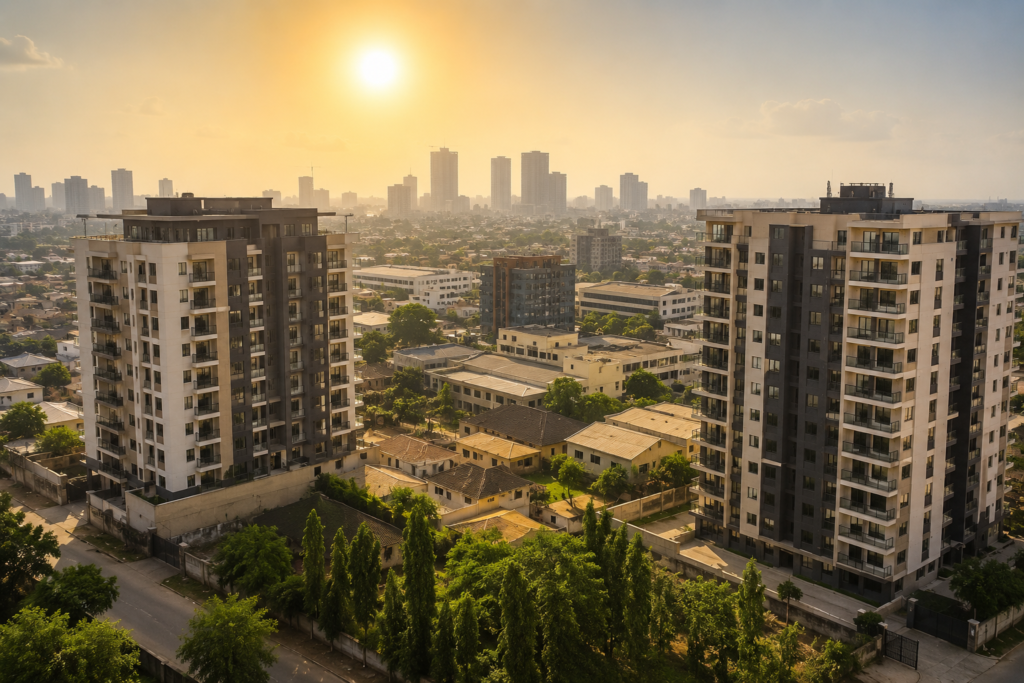
The numbers coming out of West Africa’s climate monitoring systems are not comfortable reading.
Temperatures across the region have been rising at nearly twice the global average rate over the past three decades. Extreme heat days, when temperatures exceed levels that are dangerous for outdoor workers and compromise the integrity of poorly ventilated buildings, are becoming more frequent and severe. In Nigeria’s northern states, heat stress is already a daily reality for millions of people. In Lagos, rising urban temperatures are compounding the heat island effect that comes with dense, poorly planned development and inadequate green cover.
This is not a projection. It is a present-day reality that Nigeria’s real estate sector has been slow to build around.
What Extreme Heat Does to Buildings and People
Heat is not just a comfort issue. It is a structural one.
Buildings designed without passive cooling, without cross-ventilation, without thermal mass, without shading, become uninhabitable during peak heat periods without mechanical cooling. In Nigeria, where grid power is unreliable and diesel costs have risen sharply, the cost of keeping a poorly designed building liveable during an extreme heat event falls entirely on the occupant. That cost is not theoretical. It shows up in electricity bills, in generator fuel, and in the health outcomes of people who cannot afford either.
For low and middle income residents who occupy the majority of Nigeria’s housing stock, this is a crisis playing out quietly in every hot season. Buildings that were never designed for the climate they sit in are becoming harder and harder to live in as temperatures rise.
In addition, extreme heat accelerates building material degradation. Concrete that cycles through extreme temperatures repeatedly develops microfractures over time. Roofing materials expand and contract in ways that compromise waterproofing. The long-term maintenance costs of buildings in high heat environments are significantly higher than those of buildings designed with climate in mind from the start.
What the Real Estate Sector Is Not Doing
Nigeria’s building stock is growing rapidly. Hundreds of thousands of new units are entering the market every year across residential, commercial, and mixed-use categories.
The vast majority are being built to the same conventional standards that have defined Nigerian construction for decades. Concrete block walls. Metal roofing. Minimal window placement for ventilation. Air conditioning as an afterthought, or an assumption that someone else will install it later.
These design choices made sense in a different climate reality. They make less sense now. And they will make even less sense in ten years as temperatures continue to rise and the cost of mechanical cooling continues to climb.
The real estate sector has been having the green building conversation in Nigeria for several years now. The Green Building Council Nigeria exists. The EDGE certification pathway is available. But green building adoption remains concentrated in a small number of premium commercial developments. The mass residential market, where the majority of Nigerians live has barely been touched by climate-conscious design thinking.
Nigeria’s Green Building Shift: Why Developers Can No Longer Ignore Sustainability.
What Climate-Responsive Design Actually Looks Like
Designing for heat in Nigeria does not require expensive imported technology. It requires attention to fundamentals that Nigerian builders understood before air conditioning became the default solution.
Orientation matters. A building positioned to capture prevailing breezes and minimize direct sun exposure on west-facing walls is a building that stays cooler without mechanical intervention. Roof design matters. A well-ventilated roof space dramatically reduces heat transfer into living areas. Wall thickness and material choice matter. Compressed earth blocks and cavity walls provide thermal mass that moderates interior temperatures through the heat of the day.
These are not radical innovations. They are building science principles that are well understood and increasingly well documented for Nigeria’s specific climate conditions. What is missing is the industry-wide commitment to applying them consistently rather than treating them as optional upgrades for sustainability-minded developers.
Meanwhile, urban planning has a role that it has been failing to play. Green cover trees, parks, planted surfaces significantly reduces urban heat island effects. Cities that integrate green infrastructure into their development frameworks are cities that manage heat better at a neighborhood level. Lagos, Abuja, and Nigeria’s other major cities need green infrastructure planning that treats heat management as a core urban service, not a landscaping afterthought.
Conclusion
West Africa is getting hotter. Nigeria’s buildings are not keeping pace with that reality. The real estate sector has the tools, the frameworks, and the knowledge to build differently. What it needs now is the urgency to match the scale of the problem. Every building constructed today will still be standing in 2050. The decisions being made on construction sites across Nigeria right now will determine whether the country’s built environment is equipped for the climate it is heading into or trapped in the assumptions of a climate that no longer exists.
Nigeria’s Flood Risk Real Estate 2026: What the Outlook Means.