
Lagos Floods Again, and the $4 Billion Question Won’t Go Away
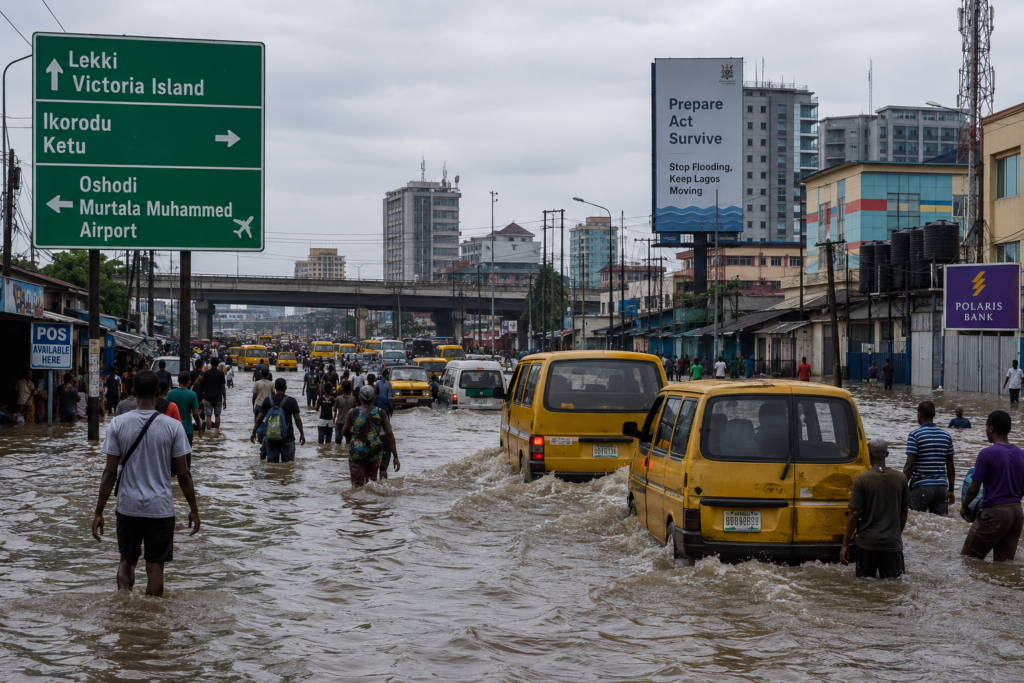
Lagos ground to a halt on Tuesday as floodwaters swallowed roads from Lekki to Ikorodu, submerged homes and shops, shut schools, and forced flight operations to relocate at the airport. Residents called it one of the city’s worst flooding episodes in recent years.
A City Drowning Despite Warnings
Lagos sits barely 1.5 metres above sea level, so seasonal flooding is nothing new. But according to World Bank estimates, flooding and lost productivity now cost the Lagos economy as much as $4 billion annually. This year’s floods came despite repeated alerts. NiMet warned of severe flash flooding risk in February. The Lagos State Ministry of Environment predicted above-normal rainfall a month later. Neither warning stopped Tuesday’s disruption.
Businesses and Residents Pay the Price
Markets in Oshodi and Ikotun went underwater, with traders scrambling to save goods. At Murtala Muhammed Airport, floodwater reached the temporary terminal’s power plant, forcing several international airlines to relocate their operations. Commuters described three-hour ordeals, damaged laptops and phones, and motorcycle fares jumping from N300 to N2,000 in flooded areas.
Nigeria’s Housing Industry Issues Wake-Up Call on Future-Ready Homes
Who’s Responsible?
Lagos Environment Commissioner Tokunbo Wahab described the event as a flash flood triggered by intense rainfall, and said water levels have since receded in most areas. Residents pushed back on that framing, pointing instead to clogged drains, unchecked waste disposal, and buildings approved on floodplains and drainage setbacks as the deeper issue.
Why This Matters for Real Estate
Every flood cycle adds pressure on property values, insurance costs, and infrastructure planning in Nigeria’s commercial capital. Until drainage maintenance and building enforcement catch up with the risk, developers and investors face a Lagos market where climate exposure is now a standing cost of doing business, not an occasional disruption.
Conclusion
Lagos has the warnings, the data, and the annual pattern. What it doesn’t yet have is a system that breaks the cycle before the next rainy season repeats it.
Nigeria’s Real Estate Boom: Big Q3 Gains, Tougher Questions Ahead
PRAISE SAMSON