
Port Harcourt’s Housing Market
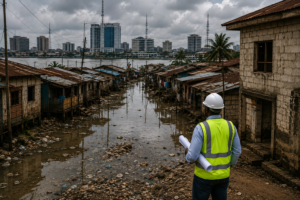
Port Harcourt should be one of Nigeria’s strongest real estate markets. It is the centre of the country’s oil and gas economy, has significant commercial activity, a large professional population, and housing demand that has consistently outpaced supply for years.
Instead it is a market defined by dysfunction.
What Is Actually Happening
Reports indicate that some Port Harcourt residents are spending over 100 percent of their monthly income on rent, a figure reflecting both inadequate housing supply and the absence of any regulatory framework to manage rent increases in a market under severe pressure.
The city’s flooding problem compounds everything. Significant portions of Port Harcourt sit on low-lying land that floods repeatedly during the rainy season. Infrastructure investment has not kept pace with the city’s growth. Development continues in flood-prone zones because regulatory enforcement to stop it is inconsistent.
The oil and gas sector has historically generated a two-tier housing market premium accommodation for expatriates and senior executives on one end, an underserved mass market on the other. As the oil sector has contracted, pressure on the mass market has intensified without a corresponding increase in supply.
Rivers State Housing Crisis: Residents Spend 100% Income on Rent.
Conclusion
Port Harcourt’s real estate problem is not a mystery. Inadequate supply, regulatory inconsistency, climate vulnerability, and a market structure leaving most residents without viable options. None of these problems are unsolvable. All of them require deliberate attention the sector has not consistently provided.
Nigerian Developers Are Finally Looking Beyond Lagos and Abuja.
PRAISE SAMSON