
Nigerian Developers Are Finally Looking Beyond Lagos and Abuja. Here Is What Is Driving It.
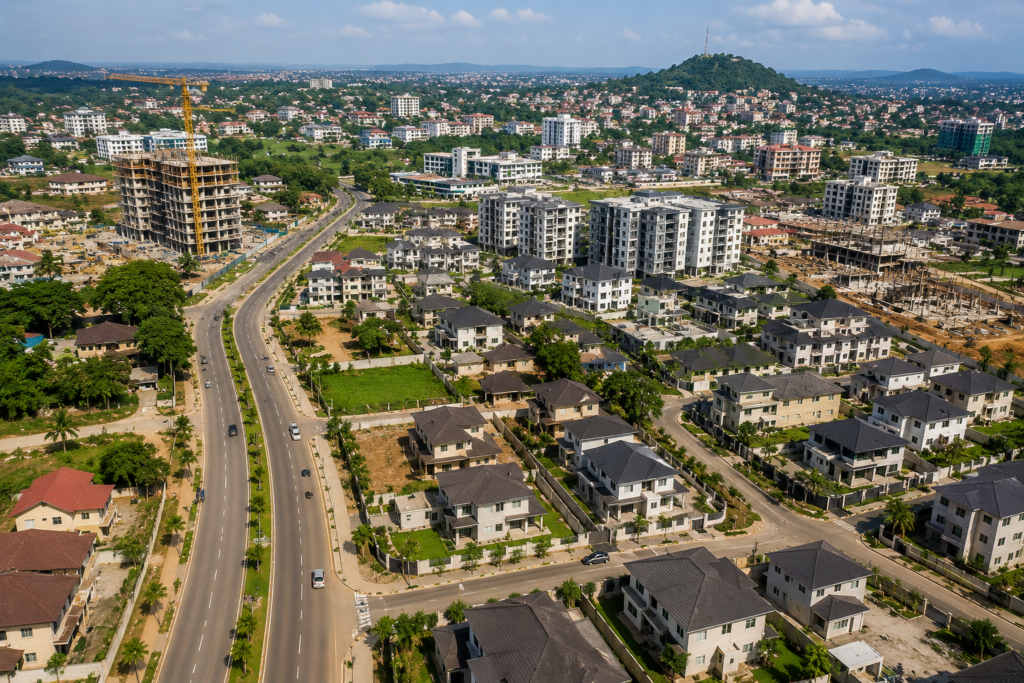
For as long as anyone in Nigeria’s real estate industry can remember, the market has had two centres of gravity. Lagos and Abuja. Everything else was secondary, a fallback for developers who could not compete in the prime corridors, or a retirement destination for buyers who had already made their money in the big cities.
That thinking is changing. And the change is being driven by something more powerful than preference. It is being driven by economics.
What Lagos and Abuja Are No Longer Offering
Land prices in Lagos have reached levels that make affordable and mid-market development increasingly unviable without premium pricing. In Lekki, Ikoyi, and Victoria Island, the cost of land alone can consume a developer’s entire margin before a single block is laid. Even in the so-called emerging corridors, Ibeju-Lekki, Epe, Ajah prices have moved significantly as developers flooded in looking for cheaper alternatives within the same city.
Abuja tells a similar story. The FCT’s prime districts, Maitama, Asokoro, Wuse have long been out of reach for mid-market development. And the satellite towns absorbing the city’s expansion come with their own infrastructure gaps that developers must either solve themselves or absorb into project risk.
In both cities, regulatory processes remain slow. Obtaining approvals, perfecting titles, and navigating planning requirements in Lagos and Abuja consumes time and money that smaller and mid-size developers increasingly cannot afford.
The result is a growing number of developers quietly asking a question that would have seemed unusual five years ago. What if we build somewhere else?
Where the Attention Is Going
Enugu is the most visible example of this shift. The state has been deliberate about positioning itself as a destination for investment, improving infrastructure, activating business corridors, and signalling through consistent policy messaging that the environment is open. Developers who moved early into Enugu’s emerging residential corridors are already seeing demand that validates the decision.
Port Harcourt is another market getting a second look. The city’s rental crisis documented earlier this year reflects a demand pressure that existing supply is not meeting. For developers who can navigate the Rivers State market, that gap represents genuine opportunity.
Ibadan is attracting attention for different reasons. Land is still accessible at prices that make affordable and mid-market development viable. The city’s population is enormous and growing. And its proximity to Lagos close enough for connectivity, far enough for price differentiation that makes it an attractive proposition for buyers who have been priced out of the Lagos market but still want access to its economic ecosystem.
Owerri, Uyo, and Calabar are also appearing more frequently in developer conversations. These are cities with growing middle-class populations, improving infrastructure, and real estate markets that have not yet been tested at scale by serious institutional development.
Enugu Real Estate: Is the Sector Ready?
What Makes This Moment Different
Secondary city development in Nigeria is not a new idea. Developers have been building outside Lagos and Abuja for decades. What is different now is the combination of factors pushing and pulling at the same time.
Rising costs in the primary markets are pushing developers out. Improving infrastructure in secondary cities, airports, roads, power is pulling them in. A growing professional class in cities like Enugu, Ibadan, and Port Harcourt is creating demand that did not exist at the same scale a decade ago. And a diaspora community with strong ties to these cities is supplying capital that is looking for viable investment channels outside the overcrowded Lagos premium market.
In addition, the sustainability argument is now part of the conversation in a way it was not before. Secondary cities offer something Lagos and Abuja can no longer offer, the chance to build right from the beginning. Land is accessible. Density is manageable. Planning frameworks are still being shaped. A developer who embeds climate-resilient design, proper drainage, and energy efficiency into projects in these corridors today is building assets that will hold value as the cities grow and climate pressure increases.
That window does not stay open indefinitely.
What Developers Need to Get Right
Moving beyond Lagos and Abuja is not without risk. Secondary city markets require different approaches. Buyer profiles are different. Financing access is more limited. Title processes vary significantly from state to state. And the infrastructure that developers can assume in prime Lagos corridors often has to be provided or co-funded in secondary markets.
Developers who succeed in these markets will be those who do their homework before acquiring land. That means understanding the local regulatory environment. It means building relationships with state government agencies before projects break ground. It means designing for the income profile of the actual population not importing the same product typology that works in Lekki and expecting it to sell in Enugu or Ibadan.
It also means treating sustainability as a baseline rather than an option. Secondary city buyers are just as exposed to flooding, heat stress, and energy costs as buyers in Lagos. Buildings that address those realities hold value better and attract better tenants. That is as true in Owerri as it is in Victoria Island.
Nigeria’s Flood Risk Real Estate 2026: What the Outlook Means.
Conclusion
Lagos and Abuja will remain Nigeria’s dominant real estate markets for the foreseeable future. That is not the question. The question is whether the developers who move into secondary cities now deliberately, with proper research and climate-conscious design will find themselves in front of a demand wave that is only beginning to build. The evidence suggests they will. The window is open. It will not stay that way forever.
Nigeria’s Construction Workforce Strategy: Who Is Building It?