
Lagos Just Flagged 176 Estates. The Real Estate Sector Should Pay Attention.
Lagos estate approval Nigeria enforcement just became impossible to ignore. There is a question every property buyer in Nigeria should be asking more often than they currently do.
Not whether the land exists.
Not whether the estate has a gate, a fence, or an impressive brochure.
The question is whether the development has the necessary approvals.
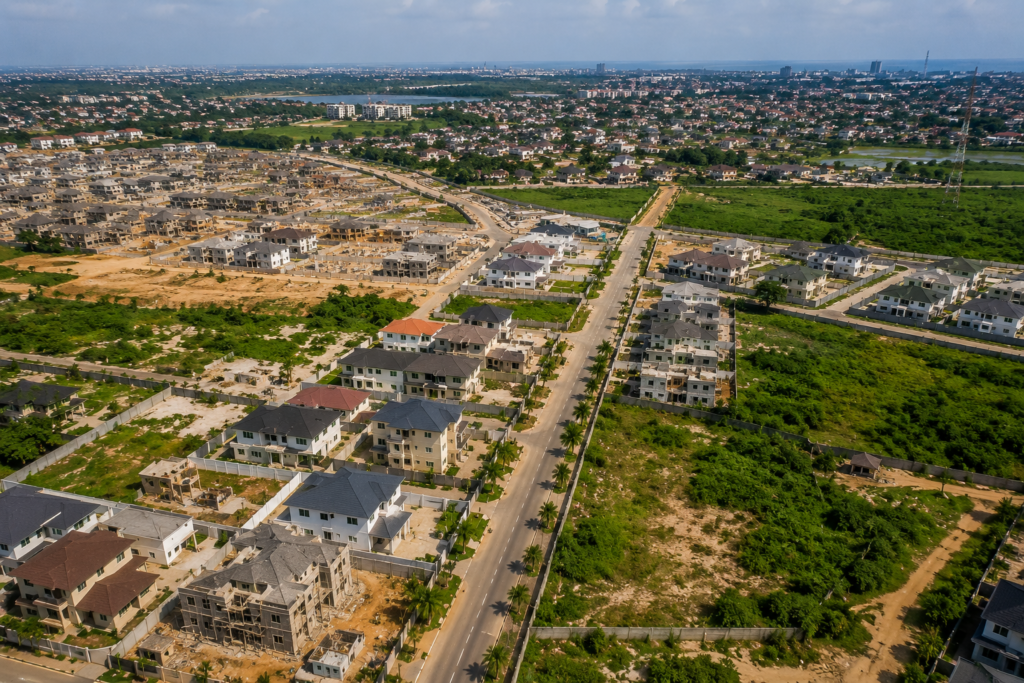
That question became harder to ignore this week after the Lagos State Government published a list of 176 estates identified as operating without approved layout permits across major development corridors, including Ajah, Eti-Osa, Ibeju-Lekki, and Epe. The state has asked developers to regularise their documentation as enforcement of planning regulations intensifies.
The announcement is significant. But the bigger story is what it reveals about how real estate development has been happening in some of Nigeria’s fastest-growing property markets.
The Lagos Estate Approval Nigeria Problem Nobody Talks About
Nigeria’s real estate conversation often focuses on land titles, housing deficits, and construction costs. Planning approvals rarely receive the same attention.
In reality, approvals matter. Layout approvals are part of what ensures that roads, drainage systems, access routes, public spaces, and supporting infrastructure are properly integrated into an estate before development begins. When those approvals are missing, the risk does not disappear. It simply shifts to future residents and property owners.
The challenge is that many buyers never ask these questions during the purchase process. They see active construction. They see other people buying. They assume compliance has already been handled.
Sometimes it has. Sometimes it has not.
Why Lagos Is Tightening Enforcement
Lagos is growing faster than almost every city infrastructure system designed to support it.
The pressure is visible everywhere. New estates appear along expanding corridors. Agricultural land becomes residential land almost overnight. Developers race to meet demand while regulators try to keep pace with the speed of expansion.
The result is a constant tension between growth and planning.
From building safety inspections to digital approval systems and now estate compliance enforcement, Lagos is sending a consistent message. Growth alone is no longer enough. Development must also meet regulatory standards.
For developers, that may mean longer compliance processes. Buyers may find greater protection as a result. The market as a whole could shift toward more structured urban growth.
What Buyers Should Learn From This
This story is not just about the estates that appeared on the list.
It is about due diligence.
Before buying into any estate development, buyers should verify planning approvals, layout documentation, title status, and the regulatory standing of the project. A beautiful marketing campaign is not evidence of compliance. Similarly, neither is a crowded sales office.
After all, the cost of asking difficult questions before purchase is far lower than the cost of discovering problems after money has changed hands.
Lagos Building Approval Goes Digital: What Developers Must Know.
The Bigger Urban Development Question
There is also a wider lesson here.
Nigeria’s housing shortage is real. Cities need more homes. Developers need room to build.
But rapid expansion without proper planning creates problems that last for decades. Flooding. Traffic congestion. Poor drainage. Infrastructure deficits. Entire communities eventually inherit the consequences.
Indeed, the real estate sector often talks about building more. The conversation about building better deserves equal attention.
Conclusion
The publication of 176 estates may look like a regulatory headline. In reality, it is a reminder that urban development is not simply about construction. It is about compliance, planning, and long-term sustainability.
Lagos is making it clear that approvals matter. Developers who understand that will adapt quickly. Buyers who ask the right questions may avoid very expensive mistakes. The Lagos estate approval Nigeria story is bigger than one regulatory headline.
Nigeria Housing Deficit Crisis Driving Urgent Real Estate Shift.