Lagos Just Sealed Properties Over Elevator Violations. The Real Estate Sector Should Take That Seriously.
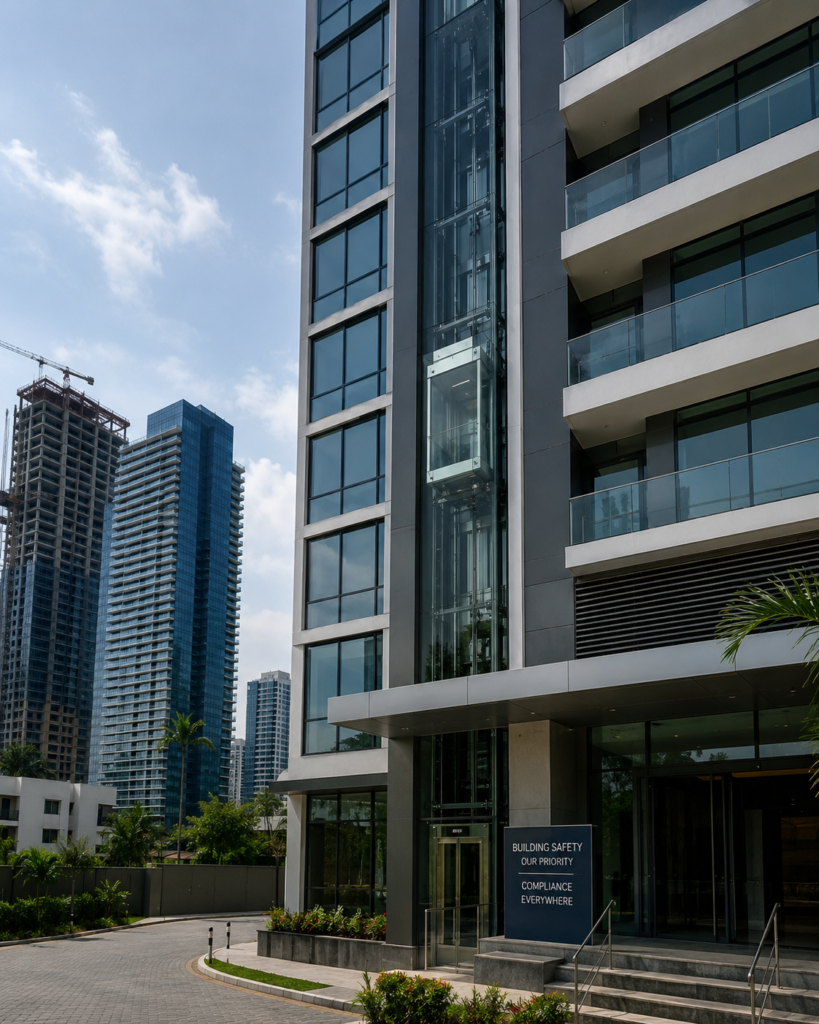
Lagos building safety real estate enforcement just sent a message the sector cannot ignore. The Lagos State government sealed properties in Lekki and Ikeja over elevator safety violations. Not structural collapse. Not illegal construction. Elevators. That detail matters.
Clearly, it tells you something about where Lagos is heading as a regulatory environment and it raises a question that every developer and property manager in Nigeria’s commercial capital needs to sit with. How many buildings currently operating in this city would fail a serious safety inspection?
The Inspection Problem
Nigeria has had a building inspection problem for a long time. The most visible version of it is building collapse and the country has seen enough of those to fill a grim record. Between 1974 and 2024, Nigeria recorded over 600 building collapses. Most investigations pointed to the same cluster of causes. Poor construction quality. Substandard materials were the norm. In many cases, inspection before occupation never happened at all.
However, collapse is the extreme end of a much larger problem, Buildings that are not collapsing can still be failing slowly, quietly, in ways that accumulate risk until something goes wrong. Faulty electrical systems. Compromised structural elements. Elevators that have not been serviced, certified, or inspected in years.
The Lekki and Ikeja properties sealed this week sit in that middle category. They were standing, occupied, and generating rent. And they were doing so with elevator systems that did not meet the safety standards the state requires.
Lagos Building Safety Real Estate: What the Sealing Signals
Lagos is tightening. That is the honest read of what happened this week.
In fact, the state has been signaling this direction for a while. The Lagos State Building Control Agency has been more active. The focus on elevator certification is part of a broader push to move the city’s building stock toward compliance, not just in new developments, but in existing ones.
For developers, this changes the calculus on property management. A building that was permitted, sold, and occupied years ago is not automatically safe from regulatory action today. Standards evolve. As a result, enforcement catches up. The properties sealed this week were not new. They were established assets in prime locations, generating income until they were not.
Meanwhile, for investors and buyers, it raises the due diligence bar. Asking about title and structure is no longer enough. The question now includes mechanical and electrical systems, maintenance records, and compliance status with current Lagos State regulations.
Nigeria’s Green Building Shift: Why Developers Can No Longer Ignore Sustainability
The Sustainability Connection
There is a broader point here that the green building conversation often misses.
In reality, sustainability in real estate is not just about solar panels and rainwater harvesting. It is about building and maintaining assets that work safely, reliably, and over a long period. A building with an uncertified elevator is not a sustainable asset. It is a liability dressed as an investment.
The developers who understand this are already building differently. They factor in lifecycle maintenance costs from the design stage. Building management systems that track equipment performance are now standard in their projects. More importantly, they certify not just the structure but every system inside it.
Ultimately, that approach costs more upfront. It costs significantly less over the life of the asset. And in a regulatory environment that is clearly moving toward tighter enforcement, it is the only approach that makes long-term financial sense.
Conclusion
The properties sealed in Lekki and Ikeja this week will reopen when they fix their elevators. That is not the point. But that is not the real story here. Lagos just demonstrated that it is willing to act on existing buildings, in prime locations, without waiting for a collapse to force the issue. This is a different kind of regulatory environment than the one many developers and property managers have been operating in. The sector needs to adjust accordingly.
Nigeria’s Real Estate Boom: Big Q3 Gains, Tougher Questions Ahead