
The FCCPC Just Sealed Two Abuja Real Estate Firms. The Sector Should Pay Attention.
Nigeria’s real estate sector has had a consumer trust problem for years. Buyers pay for homes that are delayed indefinitely. Refund requests disappear into silence. Developers make promises that contracts never fully protect. Most of the time, the consequences are minimal.
That is what makes this week’s FCCPC enforcement action important.
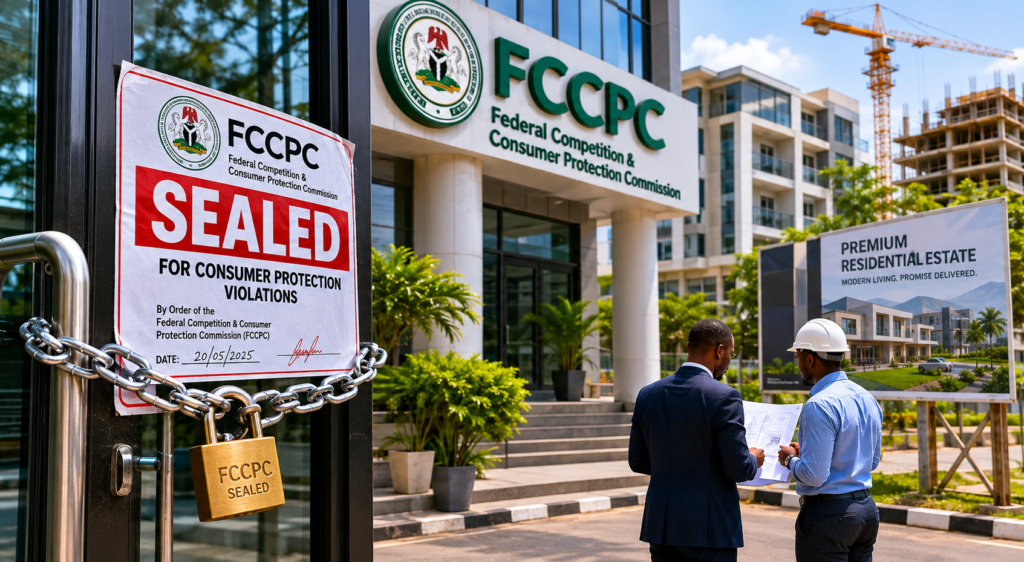
The Federal Competition and Consumer Protection Commission sealed two Abuja-based real estate firms over unresolved consumer complaints involving delayed property delivery and refund disputes. According to the Commission, the companies ignored earlier regulatory directives the Commission issued after buyers filed complaints.
The details matter less than the signal. Nigerian regulators are becoming more willing to treat unresolved real estate complaints as enforcement issues rather than private disputes buyers must navigate alone.
What the FCCPC Real Estate Nigeria Action Means for the Market
For a long time, many buyers simply absorbed losses when projects stalled or refund promises went nowhere. Court processes were slow. Regulatory intervention was rare. And many developers operated with the assumption that frustrated buyers would eventually give up.
That environment may be changing.
The FCCPC sealing offices, instead of issuing another warning letter, send a message that the industry cannot ignore. It suggests regulators are becoming more comfortable using enforcement powers inside the real estate sector, especially in cases involving repeated complaints and non-compliance with directives.
And this is not happening in isolation. Over the past few months, the Commission has taken similar action against other Abuja property developments over alleged failure to deliver homes after payment.
Nigeria’s Property Market Is Going Digital. The Transition Is Messier Than Anyone Expected.
The Reputation Problem Developers Created
The uncomfortable reality is that Nigeria’s real estate sector created part of this problem itself.
Too many developers sold off-plan projects with timelines they could not realistically meet. Others treated refund obligations as optional once buyer funds had already been collected. The result is a market where buyers now approach property transactions with suspicion first and optimism second.
That distrust has consequences beyond individual disputes.
Institutional investors are paying closer attention to governance standards inside Nigerian real estate. Consumer complaints, unresolved disputes, and regulatory sanctions increasingly affect how developers are viewed by lenders, partners, and investors looking at the sector long term.
Developers who consistently deliver projects and honour agreements should actually welcome stronger enforcement. Markets become healthier when credibility matters.
What Buyers Should Understand
At the same time, enforcement does not remove the need for due diligence.
Buyers still need to verify titles, check development approvals, review contracts carefully, and document every payment and communication. A regulator stepping in after problems emerge is not the same thing as preventing those problems from happening in the first place.
But the balance of power may no longer be as one-sided as it once was.
The FCCPC action suggests consumer complaints in Nigerian real estate are beginning to carry more regulatory weight than they used to. That alone changes the conversation.
Conclusion
Two Abuja firms being sealed will not fix Nigeria’s real estate trust deficit overnight. But it reflects something important: regulators are becoming more willing to intervene in disputes the sector previously treated as normal business friction.
For developers, the message is straightforward. Delayed delivery, ignored complaints, and unresolved refunds are no longer just reputational risks. Increasingly, they are regulatory risks too.
And for a market trying to attract long-term capital and restore buyer confidence, that shift may have been overdue.
Smart Money Is Moving Into Nigerian Real Estate. Here Is Where It Is Going.