
What Is Happening in Burkina Faso: What It Means for Climate, Cities and Real Estate in Africa
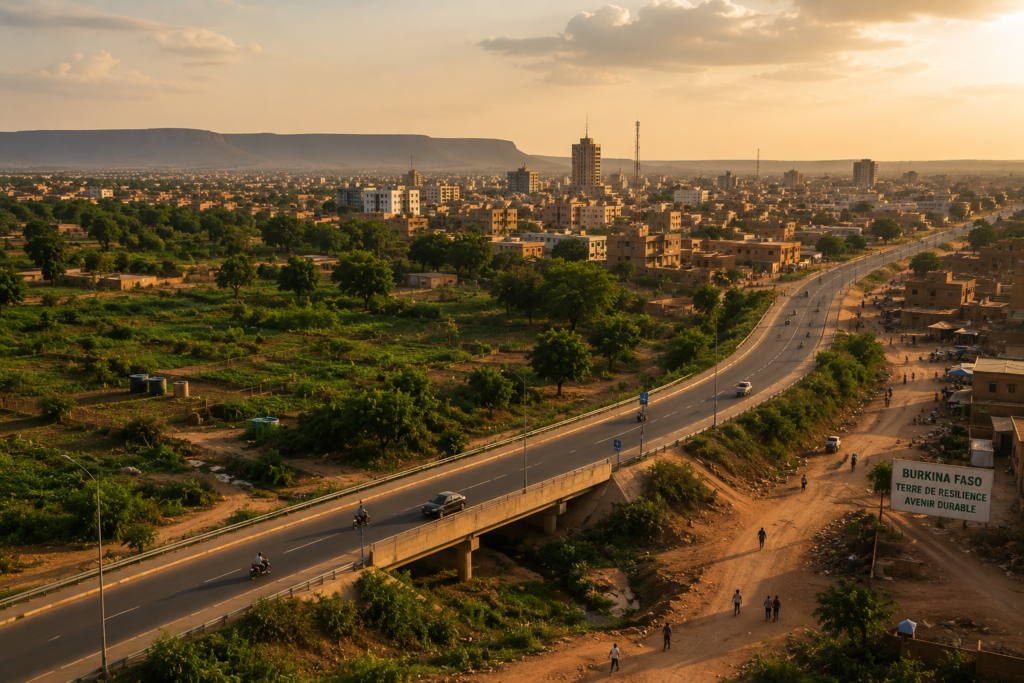
Burkina Faso climate resilience is not a story most people associate with this country. The conversation rarely goes beyond political headlines and security reports. In reality, what is happening in Burkina Faso is not just a political story. It is a climate story, an urban story, and one with direct lessons for Nigeria and the rest of the continent.
Burkina Faso is not just a country in crisis. It is a country in transformation, facing serious challenges while producing some of the most inspiring examples of community-led climate resilience on the continent. Both things are true. Both deserve to be told.
The Full Picture: Challenges and Progress
Since 2022, Burkina Faso has been under military governance. Parts of the north and east face ongoing security pressures. Over two million people have been internally displaced, and food insecurity remains a serious concern in affected areas.
However, communities are actively rebuilding. International institutions are making significant investments. Grassroots climate innovation is producing real, measurable results. Meanwhile, both sides of this story matter.
Where Burkina Faso Climate Resilience Is Actually Working
Since 2017, a community-led initiative supported by Tree Aid has transformed the lives of over 100,000 people. The majority of them are women. The program restored degraded ecosystems and built sustainable incomes from non-timber forest products such as moringa, baobab, and shea. It established 179 village tree enterprises. Seventy-three percent of participants are women who now have measurably greater control over land and household resources. This is community-driven climate adaptation. And it is working.
In addition, on a larger scale, the World Bank approved a $216 million project in 2025 to build climate-resilient road infrastructure across the SKBo region. The routes serve nearly four million people. Engineers designed them specifically to withstand floods, extreme heat, and seasonal disruptions. The IMF followed with $122.7 million in climate-linked economic support. The economy is projected to grow at five percent in 2025. These are not small numbers. They represent serious institutional confidence in Burkina Faso’s long-term potential.
What the Sahel Is Telling the Rest of Us
The Sahel region has experienced some of the most severe climate change impacts on earth over the past three decades. Rainfall is increasingly unpredictable. Temperatures have risen faster than the global average. Land degradation now squeezes farming and herding communities from every direction. The Green Climate Fund has multiple active projects in Burkina Faso, from early warning systems to climate-resilient agriculture, targeting exactly these pressures.
Clearly, for Nigeria the warning is close to home. Lake Chad has shrunk dramatically over five decades. Desertification is advancing southward. Farmer-herder tensions over land and water are already well documented. The displacement pressures Burkina Faso faces today could intensify here if the connection between climate action, land governance, and urban planning is not taken seriously.
Nigeria’s Flood Risk Real Estate 2026: What the Outlook Means.
The Urban Development Lesson
Burkina Faso shows that climate resilience cannot be an afterthought. It has to be built in from the start. The village tree enterprises did not wait for government. The World Bank’s road project did not just repair infrastructure, it designed for the climate future, not the past.
Nigeria is building millions of new housing units. Ultimately, the question is what standard those homes are being built to. Flood-resistant foundations. Passive cooling. Solar energy. Green infrastructure. These are not premium features for wealthy buyers. They are the baseline standard a continent navigating climate change must demand.
Conclusion
Burkina Faso is facing real challenges and producing real solutions. Communities are restoring forests. International institutions are investing in resilient infrastructure. The economy is growing. Women are building businesses and gaining control over resources.
Burkina Faso is not just a warning for Africa. It is proof of what is possible when communities, governments, and partners commit to building resilience even under the most difficult conditions. The path forward for Nigeria and the continent runs through exactly that kind of commitment.
Nigeria’s Green Building Shift: Why Developers Can No Longer Ignore Sustainability.