The Hidden Cost of Poor Waste Management on Nigerian Real Estate Values.
There is a conversation the Nigerian real estate sector rarely has openly. It is not about land titles or mortgage rates or construction costs. It is about what happens to property values when the environment around a development is visibly, chronically degraded.
Waste management is that conversation. And the sector has been avoiding it for too long.
What Waste Actually Does to Property
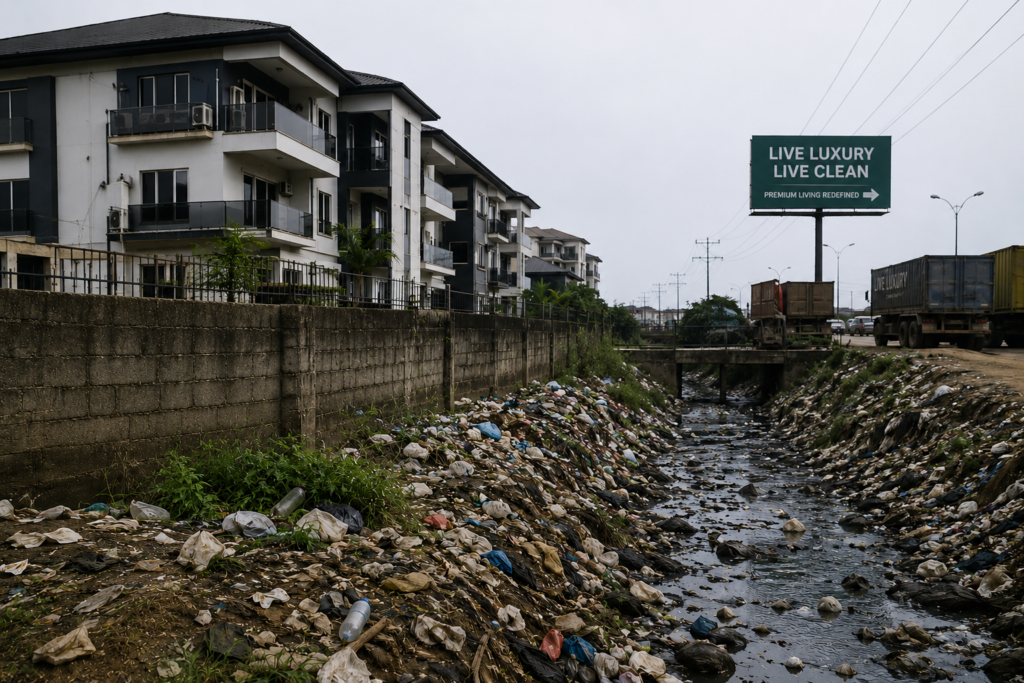
Walk through any major Nigerian city, and the pattern is visible. Drainage channels blocked by plastic waste. Roadsides lined with refuse that has not been collected in weeks. Open dumps now sit beside estates marketed as premium developments. The developers who built those estates did not put the dumps there. But the dumps are there anyway. And buyers are paying the price.
Property values do not exist in isolation. They are shaped by the immediate environment as much as by the structure itself. A well-built apartment in a neighborhood with chronic waste management failure is a depreciating asset, not because of anything the developer did wrong, but because the surrounding environment is making it less desirable, less liveable, and less financeable over time.
Estate surveyors in markets with mature valuation frameworks account for environmental quality as a pricing factor. In Nigeria, that practice is inconsistent at best. Valuations focus heavily on structure, location, and comparable sales. What happens outside the estate gate rarely enters the valuation conversation. But buyers feel it. And over time, the market reflects it.
The Climate Connection
Poor waste management in Nigerian cities is not just an aesthetic problem. It is a climate risk multiplier.
Blocked drainage channels are now one of the biggest drivers of urban flooding in cities like Lagos, Port Harcourt, and Ibadan. In many cases, those drainage systems are clogged with unmanaged solid waste.
Every rainy season, developments that sit in otherwise viable locations flood because the drainage infrastructure around them cannot function under the weight of accumulated waste. The flooding damages structures, destroys personal property, and drives residents out of developments that were never designed to be flood zones.
In addition, open waste burning still common in many Nigerian urban areas, contributes to air quality degradation that affects health outcomes for residents of nearby developments. A residential estate marketed on the basis of a clean, healthy living environment that sits downwind of a burning dump is not delivering what it promised. Over time, that gap between marketing and reality becomes difficult to ignore.
Nigeria’s Flood Risk Real Estate 2026: What the Outlook Means.
Who Is Responsible
This is where the conversation gets complicated. Waste management in Nigerian cities is primarily a government responsibility. State waste management agencies, local government authorities, and the Federal Ministry of Environment all have mandates that touch on solid waste collection and disposal. The consistent failure to fulfil those mandates has created the environmental conditions that are now quietly eroding property values across the country.
But developers cannot simply point at government and wait. The real estate sector has a direct financial interest in the environmental quality of the areas where it builds. Developers who engage proactively whether through community waste management partnerships, estate-level waste collection systems, or advocacy for better municipal services in their development corridors are protecting their own asset values.
Some estate developments in Lagos and Abuja have already moved in this direction. Gated communities with internal waste collection contracts, composting programmes, and recycling initiatives are beginning to demonstrate that environmental quality inside a development can be maintained even when the surrounding environment is poorly managed. That approach has limits, it cannot fully insulate a development from what surrounds it, but it is a start.
What the Sector Needs to Do
Waste management is still treated like an afterthought in too many developments.
By the time residents move in, the environmental problems around the project are already visible.
Developers should assess waste management infrastructure in any area before acquiring land. If municipal services are absent or unreliable, that gap needs to be factored into the project plan, either through estate-level solutions or through engagement with local authorities before ground is broken.
Estate surveyors and valuers need to integrate environmental quality including waste management into valuation frameworks more consistently. A property sitting beside a chronically mismanaged waste environment should reflect that reality in its assessed value. Buyers deserve that transparency.
Meanwhile, the government needs to treat urban waste management as the infrastructure priority it is. It is not a sanitation issue alone. It is a real estate value issue, a climate resilience issue, and an economic productivity issue all at once.
Conclusion
Poor waste management is costing Nigerian real estate more than the sector has been willing to admit. It is showing up in property values, in flood damage, in health outcomes, and in the growing gap between what developments promise and what they deliver. The sector cannot fix municipal waste management alone. But it can stop pretending the problem does not affect the value of what it builds. That acknowledgement is the beginning of a more honest conversation.
Nigeria’s Green Building Shift: Why Developers Can No Longer Ignore Sustainability.