Lagos Bets on Climate-Resilient Infrastructure to Drive 2026 Real Estate Growth
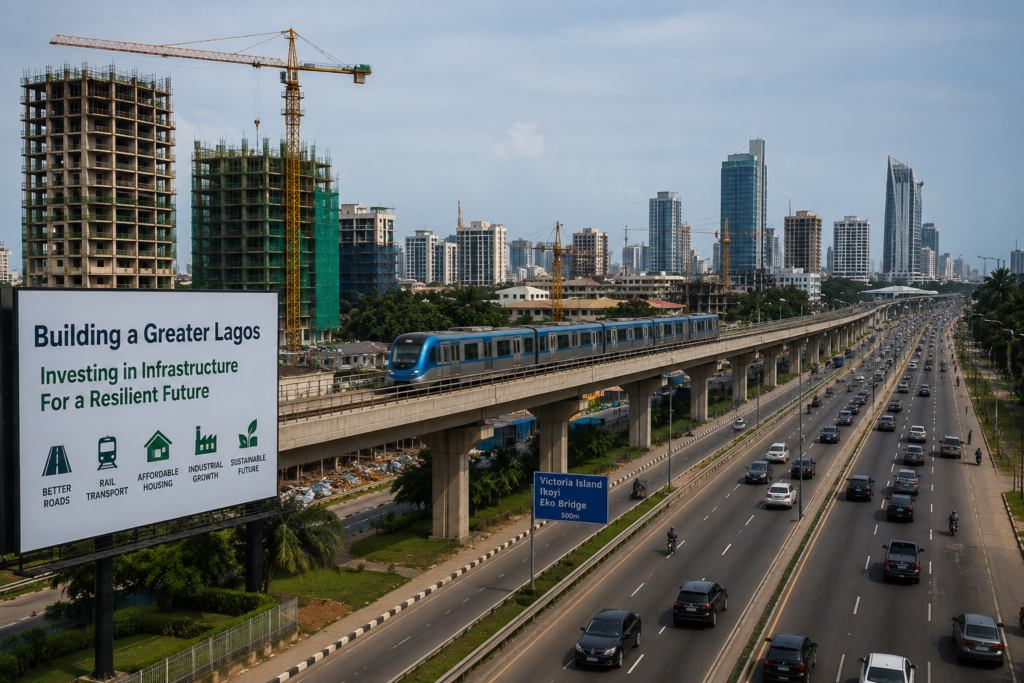
Lagos State wants infrastructure, not just buildings, to lead its real estate growth in 2026. Governor Babajide Sanwo-Olu laid out that vision at the Nigeria Construction and Real Estate Outlook Conference. The Royal Institution of Chartered Surveyors (RICS) Nigeria Group organised the event in Victoria Island.
What Lagos Is Prioritising
Sanwo-Olu, represented by Housing Commissioner Moruf Akinderu-Fatai, named five growth areas for 2026. These include transit-oriented development, urban regeneration, affordable housing, logistics and industrial parks, and climate-resilient infrastructure. He called infrastructure investment essential, not optional, for cities pursuing inclusive and resilient growth.
The governor tied this directly to Lagos’s population pressure. After all, Lagos remains Africa’s fastest-growing megacity. As a result, the state has leaned on infrastructure as a long-term investment strategy. The goal is to unlock private-sector confidence, rather than rely on government spending alone.
Betting on Data and Partnerships
Lagos plans to deepen infrastructure delivery and strengthen institutions. It also aims to expand climate-adaptive investments and improve data-driven planning systems. Additionally, Sanwo-Olu credited chartered surveyors and built-environment professionals with protecting long-term value and accountability in the sector. “In a global investment environment where trust is currency, your role directly influences where capital flows and where cities thrive,” he said.
Why This Matters Beyond Lagos
Lagos setting climate-resilient infrastructure as a stated 2026 priority sends a signal. The rest of the country’s real estate sector will likely follow. Other states have leaned on reactive climate response instead, rebuilding only after floods and storms hit. Lagos, by contrast, is positioning resilience as a growth strategy. Investors can plan around it, rather than treat it as a damage-control expense.
Conclusion
Whether Lagos delivers on this vision will depend on execution, not just stated priorities. The state has laid out where it wants investment to go: resilient infrastructure, transit, and affordable housing. However, 2026 will show whether that translates into projects on the ground.
Nigeria’s 2026 Flood Outlook Is Out. The Real Estate Sector Needs to Read It.