
Why Lagos Demolished 17 Ikota Homes: What Every Buyer Must Know
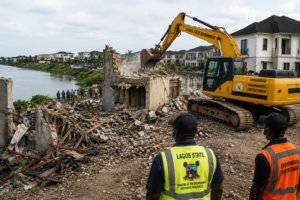
Lagos State demolished seventeen houses near the Ikota River in Lekki. The reason behind that decision is something every Nigerian property buyer needs to understand.
Commissioner for Environment and Water Resources Tokunbo Wahab explained that the buildings sat on land developers illegally reclaimed from the river’s Right of Way. This was not the government’s first warning. Officials had stopped the same encroachment before, only to find it resuming months later. Developers were actively selling reclaimed plots to buyers who had no idea they were purchasing land carved out of a natural drainage channel.
How Developers Turned a River Into Real Estate
The Ikota River corridor exists to move stormwater safely into the Lagos Lagoon. Developers reclaimed sections of that corridor, built houses on the newly created land, and marketed those properties to unsuspecting buyers as legitimate real estate.
Commissioner Wahab was direct. When developers create stormwater problems for private profit, taxpayers should not bear the cost of fixing them. Developers who build on drainage corridors should fund proper stormwater solutions themselves.
That is a position Lagos State needs to hold consistently.
The Selective Enforcement Question
Residents raised a fair question the government has not fully addressed. Buildings on the same alignment as the seventeen demolished units remained untouched. An estate directly across the river was spared entirely except for its fence.
According to Premium Times, some residents had returned after what they believed was an agreement with government, only to have their homes demolished anyway because they failed to construct required stormwater slabs on time.
Selective enforcement does not just confuse buyers. It undermines the credibility of the entire regulatory process.
Lagos Estate Approval Nigeria: 176 Estates Without Permits.
The Bigger Picture
The Ikota demolition was part of a broader crackdown. Commissioner Wahab described wetlands as nature’s sponge, designed to absorb excess water, not serve as buildable land. Drone surveys revealed widespread destruction of wetlands along the Lekki-Epe corridor tied to private development interests.
Lagos State has since launched a twenty-four month flood control plan integrating estate lakes, canals, and pumps into a Blue-Green Network designed to store and release rainwater gradually across the city.
Lagos Flooding Ifako Community: Another Warning for Lagos.
Conclusion
Commissioner Wahab urged buyers to verify land titles and conduct proper due diligence before purchasing property in Lagos. That advice carries real weight. Many reclaimed plots have already been sold to people who had no idea what they were buying. A beautiful waterfront view is not evidence of a legal title. In Lagos right now, it may be the opposite.
Property Insurance Nigeria: How Climate Risk Is Repricing.