
How Climate Change Is Reshaping Property Insurance in Nigeria, And What It Means for Developers.
Property insurance Nigeria climate risk is a conversation that has not yet fully reached the real estate sector. It is happening in boardrooms and underwriting departments. It is about how the cost of insuring property against climate-related damage is changing and how those changes are beginning to affect what gets built, where it gets built, and whether it can be financed.
In markets further along this curve, the signal is already clear. In parts of coastal Australia, flood insurance has become unavailable for certain properties regardless of price. In the United States, major insurers have withdrawn from California’s wildfire zones entirely. In the UK, the government had to create a flood insurance scheme of last resort because the private market could no longer price the risk sustainably.
Nigeria is not there yet. But the direction of travel is the same.
What Is Changing in Property Insurance Nigeria Climate Risk
Nigeria’s insurance penetration is low by any measure. Property insurance even lower. Most Nigerian property owners residential and commercial, do not carry comprehensive property insurance at all. In that context, talking about climate risk repricing might seem premature. In reality, it is not.
The 2026 flood outlook flagged over 14,000 communities across Nigeria as high flood risk. The annual flood damage to property and infrastructure runs into hundreds of billions of naira. Indeed, the pattern is not random; the same locations flood repeatedly, the same communities absorb the losses, and the same developers keep building in those zones without pricing the risk into their calculations.
However, insurance companies operating in Nigeria are paying attention to this pattern. Several have quietly tightened underwriting criteria for properties in identified flood zones. Premiums for commercial properties in high-risk areas are rising. Meanwhile, reinsurance costs, the cost Nigerian insurers pay to transfer risk to global reinsurance markets — are increasing as global reinsurers reprice climate exposure across emerging market portfolios.
Nigeria’s Flood Risk Real Estate 2026: What the Outlook Means.
What This Means for Developers
The connection between insurance and real estate financing is direct. Banks and mortgage lenders require insurance as a condition of lending. If a property becomes uninsurable or if insurance premiums reach a level that makes the cost of ownership unviable, the financing chain breaks.
In Nigeria, where mortgage penetration already sits below one percent of GDP, adding insurance unavailability to the list of financing barriers would be significant. Developers building in high flood-risk zones without climate-resilient design are not just creating risk for future residents. They are potentially creating assets that will become progressively harder to insure, harder to finance, and harder to sell as climate risk pricing matures.
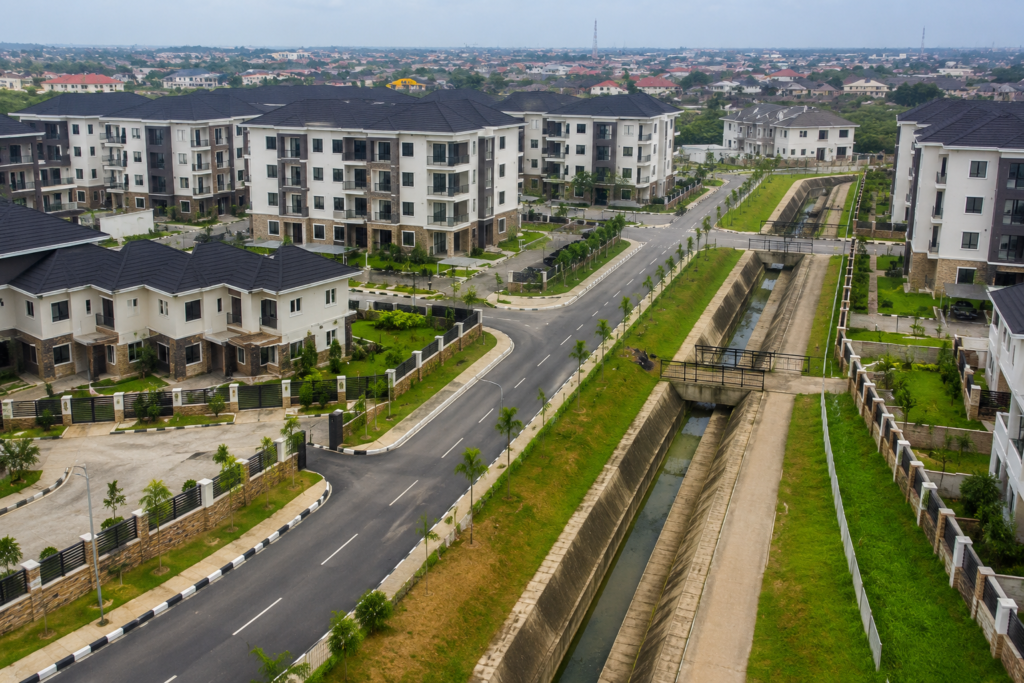
Developers paying attention to this are already making different decisions. Elevated foundations. Flood-resistant materials. Proper drainage design integrated from the planning stage. After all, these are not expensive additions when built in from the start. They become expensive corrections when retrofitted after the fact, if they can be made at all.
What the Sector Should Do
Climate risk assessment needs to become a standard part of the development process in Nigeria — not a voluntary consideration for sustainability-minded developers, but a baseline requirement for any project seeking financing.
Clearly, lenders should be asking about flood risk before approving project finance. Similarly, estate surveyors should be integrating climate exposure into valuations. And developers should be making site selection decisions with NiHSA’s flood mapping data on the table from day one.
Property insurance Nigeria climate exposure is not a future problem. It is a present one. The insurance market will price this eventually whether the development sector is ready or not. The developers who build climate resilience in now will find their assets easier to insure, easier to finance, and more competitive in a market where climate risk is becoming a standard consideration.
Conclusion
Climate change is not a future risk for Nigerian real estate. It is a present one the insurance market is already beginning to price. The sector has time to get ahead of this, to build climate-resilient assets that will remain insurable, financeable, and valuable as risk pricing continues to evolve. Ultimately, that time is not unlimited. The developers who act now will be better positioned than those who wait for the market to force the conversation.
Nigeria’s Green Building Shift: Why Developers Can No Longer Ignore Sustainability.