
Nigeria’s ESG Real Estate Transformation Is Gaining Momentum
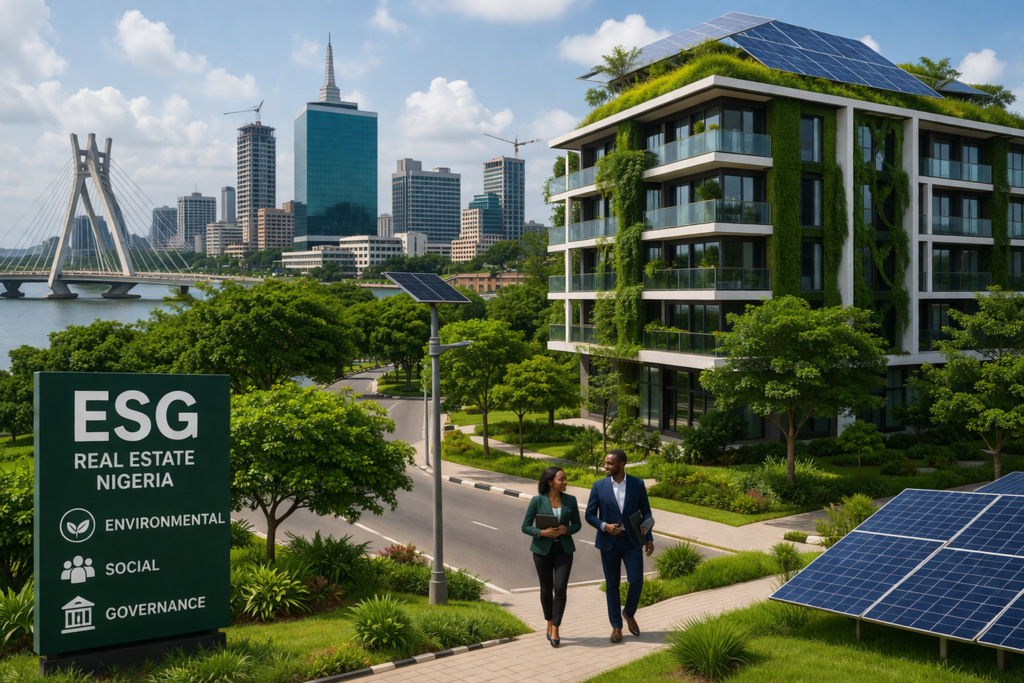
Nigeria’s real estate sector is standing at a defining moment. For years, Environmental, Social, and Governance — ESG — has been discussed in conference rooms and industry circles as a future consideration. Something important but distant. Something for later.
That moment of later has arrived.
Nigeria’s built environment is at a critical juncture, with urbanisation and infrastructure investments unmatched with sustainability practices. Them Lagos Chamber of Commerce and Industry is now driving a major knowledge-sharing conference specifically designed to move ESG from policy discussion to practical implementation across the construction, engineering, and real estate sectors. The message from industry leaders is clear and urgent: the era of optional sustainability is over.
Why ESG Is No Longer Optional
For many years, ESG reporting in Nigeria was treated as a voluntary exercise, something progressive companies did to appeal to international investors or burnish their corporate image. That era is ending. The signals are already visible in Nigeria’s regulatory landscape. The Securities and Exchange Commission Nigeria has issued sustainability disclosure guidelines for publicly listed companies. The Nigerian Exchange Limited now requires listed companies to publish sustainability reports as part of their annual disclosures. these are not suggestions. They are the early building blocks of a broader governance architecture that will shape how the entire real estate sector operates.
The real estate sector contributed 13.4 percent to Nigeria’s Gross Domestic Product in 2025, making it one of the most consequential sectors in the national economy. A sector that significant cannot afford to operate outside the frameworks that global capital is increasingly demanding.
The Challenges Nigeria Must Confront
Soji Adeniji, chairman of the LCCI construction and engineering group, did not mince words when addressing industry stakeholders. “We continue to face challenges, building failures, regulatory inconsistencies, environmental degradation, and governance gaps in project delivery,” he said. “These challenges are systemic and require a structured response that drives ESG compliance. These are not abstract problems. Building collapses claim lives across Nigerian cities every year. Developers reclaim wetlands and flood plains without proper environmental assessment. Projects are delivered without adequate community consultation. Governance gaps allow inferior materials and unsafe practices to persist unchecked.
ESG is not a buzzword. It is a practical framework for doing things right, Adeniji emphasised. Furthermore, he stressed that sustainable construction is no longer an option, it is the foundation for economic growth, investor confidence, and national development.
From Concept to Action
What makes this moment genuinely significant is the shift from talking about ESG to implementing it. Industry leaders now treat ESG as a core requirement, as investors increasingly use sustainability and governance standards to evaluate opportunities and make funding decisions. Muhammad Balogun, Group Managing Director and CEO of Global Property and Facilities International, reinforced this at the LCCI briefing. He emphasised that strong governance drives successful ESG implementation and that organisations must build effective internal systems to support sustainable practices. The conference will deliver actionable outcomes, with participants reviewing case studies from Nigeria and across Africa to understand how ESG works in practice.
For developers, ESG adoption introduces both opportunities and constraints. While compliance may increase upfront costs, it can deliver long-term benefits through operational efficiency, higher asset values, and improved tenant demand. Investors, particularly institutional players, are likely to prioritise projects with strong ESG credentials, viewing them as lower-risk and more sustainable over time.
What ESG Means for Nigerian Property Developers Right Now
The practical implications for developers are becoming clearer. The ESG shift is accelerating the adoption of green building practices in Nigeria’s property market. Developers are increasingly focusing on energy efficiency, waste reduction, and environmentally friendly construction materials. Additionally, capital is no longer flowing based on risk and return alone. Today, investors are scrutinising ESG scores, demanding sustainable building practices, and rewarding projects that protect ecosystems, conserve energy, and reduce waste.
For Nigerian developers, this means three things right now:
First, governance matters more than ever. Internal systems, project transparency, and accountability structures are no longer just good practice, they are what serious investors look for before committing capital.
Second, environmental standards are becoming baseline requirements. Properties designed with energy efficiency, proper drainage, and climate resilience built in from the start will attract better financing, better tenants, and better long-term returns.
Third, social inclusion is part of the equation. Developments that engage communities, create local employment, and contribute to livable urban environments are being rewarded by the market and by impact-oriented capital.
Climate-Proof Real Estate and Nigeria’s Property Future
Enugu Real Estate Takes Off with Aviation Boom
The Bigger Picture for Nigerian Cities
Nigeria is urbanising faster than almost any country on earth. Nigeria’s rapid urbanisation continues to outpace sustainable development efforts. This imbalance has contributed to structural failures and weak regulatory enforcement. However, ESG frameworks offer a practical solution by supporting environmental protection, encouraging transparency, and aligning economic growth with global standards. Nigeria is slowly embracing a new model: green buildings designed to be energy-efficient, low-waste, and biodiversity-friendly. The government’s push for a functional carbon framework is part of this shift. With the Climate Change Act 2021 and the National Climate Policy in place, efforts are underway to activate a national carbon market and promote sustainable construction. The direction of travel is unmistakable. ESG compliance is becoming part of mainstream corporate regulation in Nigeria and the real estate sector sits at the centre of that transformation.
Conclusion
Nigeria’s ESG real estate transformation is not a distant aspiration. It is happening now in regulatory offices, in boardrooms, and on construction sites across the country.
The developers, investors, and professionals who engage with this shift early will not just stay relevant. They will define what Nigerian real estate looks like for the next generation. Those who wait for compliance to become mandatory before adapting will find themselves competing for diminishing capital in a market that has moved on without them.
At Green Realty Africa, we have always believed that building better cities and building profitable businesses are not opposing goals. ESG proves that they are the same goal. The transformation is underway. The question is who is ready to lead it.
Pingback: Nigeria Real Estate Market Pressures Driving Housing Crisis