
Nigeria’s 2026 Flood Outlook Is Out. The Real Estate Sector Needs to Read It.
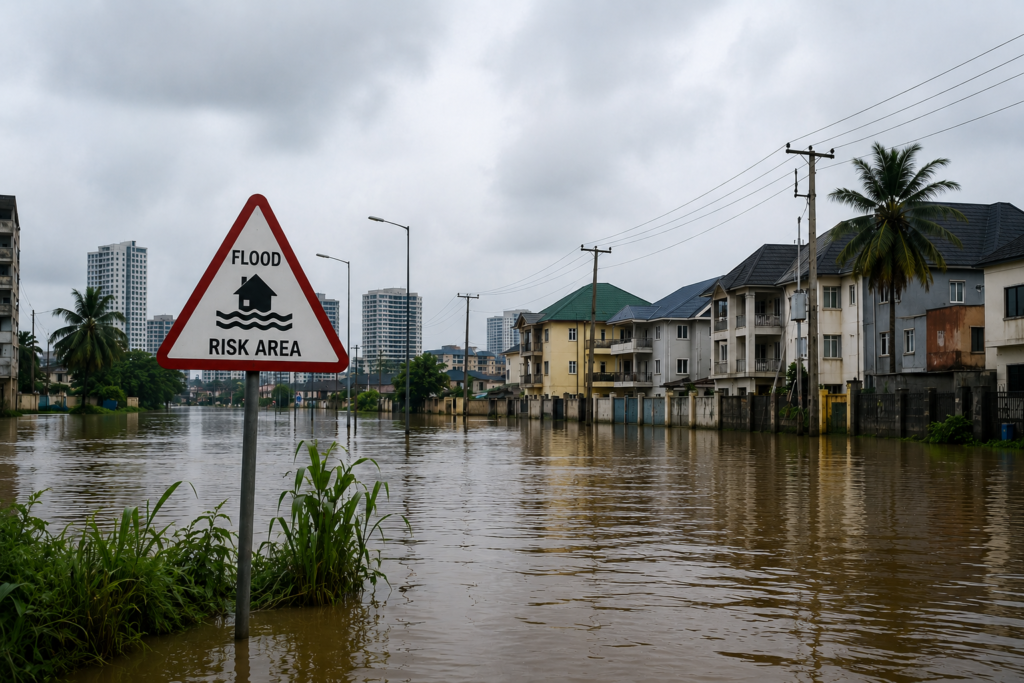
Every year, the Nigeria Hydrological Services Agency releases a flood outlook. Every year, it gets discussed in weather circles and largely ignored by the real estate industry. This year, that approach needs to change.
The 2026 Annual Flood Outlook is out. The numbers are not subtle. According to NiHSA, 14,118 communities across 266 Local Government Areas fall within high flood-risk zones this year. States on the high-risk list include Lagos, Rivers, Bayelsa, Delta, Benue, and the Federal Capital Territory. The outlook also projects increased flash and urban flooding in Abuja, Lagos, Ibadan, Port Harcourt, and Kano are all driven by high rainfall intensity, inadequate drainage, and poor urban planning.
The real estate sector builds in these cities every day. Most of it has never opened this document.
What the Outlook Is Actually Saying
The flood report is not predicting something new. Nigeria has flooded before. In 2022, flooding across 33 states displaced nearly 1.4 million people and destroyed tens of thousands of homes. What is different about 2026 is that the forecasting has gotten sharper. NiHSA is now using improved hydrological monitoring systems and integrating meteorological data to deliver more precise, location-specific risk assessments.
Developers and investors can no longer claim they did not know. The data is public. The risk zones are named. And if you are building in one of them or buying land in one, that information now exists in a government document. That is a different kind of exposure than most of the industry has been operating with.
Where Real Estate Sits in This Picture
High-risk flood zones and rapidly expanding urban areas overlap more than the industry wants to admit. Developers follow demand. Demand follows affordability. Affordability pushes buyers and renters to the urban periphery which is often where drainage infrastructure is weakest and flood exposure is highest.
The people who can least afford to lose everything to flooding are ending up in the places most likely to flood. That pattern is not random. It is what happens when climate risk is not part of the development conversation. That is not accidental. It is the product of a development ecosystem that has not priced climate risk into its decision-making.
In addition, high-end developments are not immune. Lagos Island, Lekki, and Victoria Island, some of the most expensive real estate in the count sit in coastal zones that the 2026 outlook flags for sea level and tidal flooding risk. Premium pricing does not equal climate safety.
The Due Diligence Gap
Here is the honest problem. Most real estate transactions in Nigeria still do not include a climate risk assessment. Due diligence covers title, structure, and valuation. It rarely covers flood history, drainage capacity, or proximity to mapped risk zones. That gap is becoming expensive.
Insurance premiums on flood-exposed properties are climbing. International investors are now asking for climate risk disclosure before committing capital. A Nigerian developer who cannot answer that question is going to find certain doors simply closed.
Meanwhile, properties that have been built to climate-resilient standards elevated foundations, flood-resistant materials, proper drainage design are already commanding preference among buyers who have lived through flooding once and have no interest in doing so again.
What Should Happen Now
The 2026 flood outlook should trigger a conversation that the real estate sector has been avoiding. Developers need to assess flood risk before acquiring land, not after a project is half-built. Estate surveyors need to start valuing climate exposure the way they value location. Lenders need to ask about flood risk before approving loans. And government needs to make climate risk mapping a mandatory component of development approvals not a voluntary consideration.
NiHSA has done its job. The report is public. What the real estate sector does with it is the real question
Nigeria’s Informal Settlements Are a Climate Time Bomb. Here Is Why Developers Should Care.
Conclusion
The 2026 flood outlook is not a weather document. It is a real estate risk document. Every developer, investor, and property manager operating in Nigeria’s major cities should treat it that way. The communities named in that report are places where people live, where money is invested, and where the cost of getting climate risk wrong is already being paid. The sector has the information it needs. What happens next is a choice.