
How Integrated Housing Development Models Can Transform Nigeria
Nigeria has a housing deficit of over 20 million units. That number has been cited so many times it has almost lost its weight. But behind it are millions of families paying rent they cannot afford, living in structures that were not designed to last, in communities that flood every rainy season. As cities continue to expand rapidly, experts now believe that integrated housing development Nigeria needs most.
Recently, experts under the International Real Estate Federation called for the adoption of Public-Private-People-Policy-Partnerships, also known as the 5P model. This approach encourages governments, private developers, communities, and policymakers to work together instead of operating separately.
More importantly, the experts stressed that housing should no longer be treated as a welfare issue alone. Instead, it should be seen as a major driver of economic growth, environmental sustainability, and social stability.
Nigeria’s Housing Gap Continues To Grow
Nigeria currently faces a housing deficit estimated at over 20 million units. However, the challenge goes beyond simply building more houses. Many urban communities still lack proper roads, drainage systems, electricity, and clean water.
In fast-growing cities like Lagos, Abuja, and Port Harcourt, population growth is placing enormous pressure on existing infrastructure. Informal settlements keep growing. Housing prices keep rising. And the people caught in between have nowhere to go.
At the same time, climate change is worsening the situation. Flooding, rising temperatures, and poor urban planning are increasing environmental risks for many residential communities.
Why Integrated Housing Development Nigeria Cannot Wait Any Longer
For years, many housing projects in Nigeria have failed because stakeholders worked independently. Government agencies often struggle with infrastructure delivery, while private developers focus mainly on profit margins.
However, integrated housing development models create room for collaboration. The 5P framework is built on a simple but consistently ignored idea that housing projects fail when one party carries the full weight alone. Government cannot build at scale without private capital. Private developers cannot deliver affordability without policy support. And neither can build communities that last without the people who will actually live in them being part of the conversation.”
As a result, housing projects become more sustainable, inclusive, and economically viable.
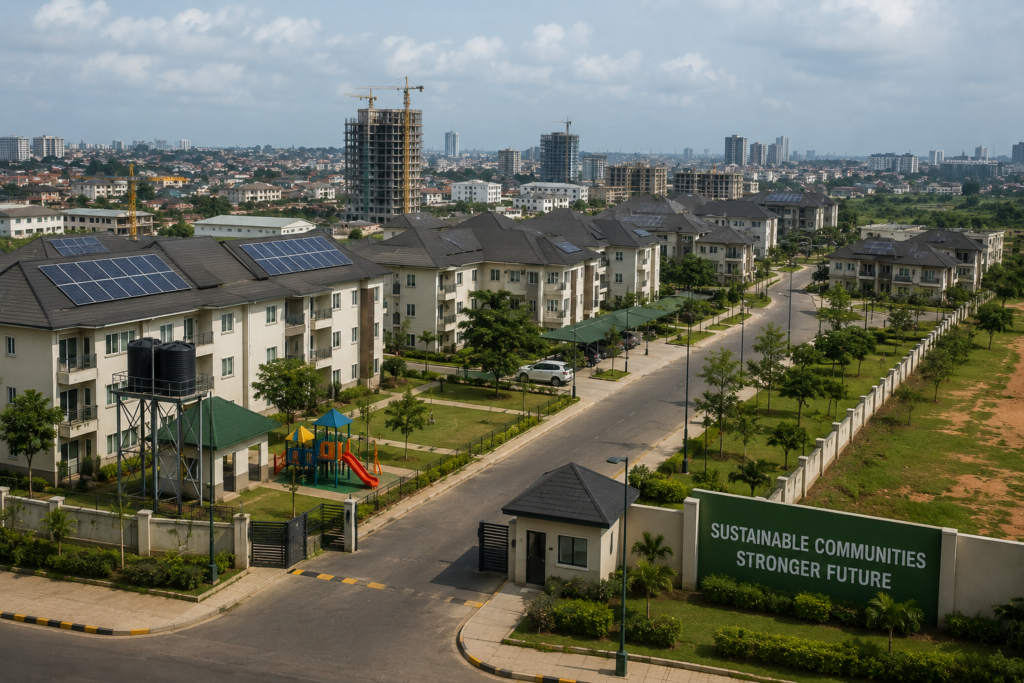
In addition, this model can encourage green building practices. Developers may invest more in solar energy, flood-resistant structures, proper waste management, and energy-efficient housing systems when long-term partnerships exist.
Nigeria’s Rental Crisis Is Getting Worse. Nobody Is Talking About It Enough.
Sustainable Housing Must Become A National Priority
Nigeria cannot continue using outdated approaches to solve modern housing problems. The country needs smarter urban planning, climate-resilient infrastructure, and policies that attract long-term investment into affordable housing.
Likewise, financial institutions must create easier mortgage systems for low and middle-income earners. Without affordable financing, millions of Nigerians will remain locked out of home ownership.
Conclusion
Nigeria does not need another framework announced at a conference and forgotten six months later. What it needs is for the right people to sit in the same room, agree on what success looks like, and stay accountable to it. The 5P model gives that process a structure. Whether the country uses it is the real question.
Inside Africa’s Green Housing Boom: A New Era of Real Estate